

Devil's-tail tearthumb (Persicaria perfoliata), also known as mile-a-minute weed, is an invasive vine of the buckwheat family (Polygonaceae). The plant forms tangled mats over other vegetation. It out-competes native plants, impoverishes wildlife habitat, restricts wildlife movement and reduces the aesthetic value of properties and public areas. This plant has a negative impact on industries that produce trees and shrubs such as orchards, nurseries, Christmas tree plantations and regeneration sites.
Report a devil's-tail tearthumb sighting
Where it's found
Devil's-tail tearthumb is not present in Canada. The species is native to eastern Asia. It is now highly invasive in the northeastern United States. The plant's habitats include riverbanks, young forests, roadsides, hedges, fields, pastures and forest edges, plantations, gardens and parks.
How to spot it
-
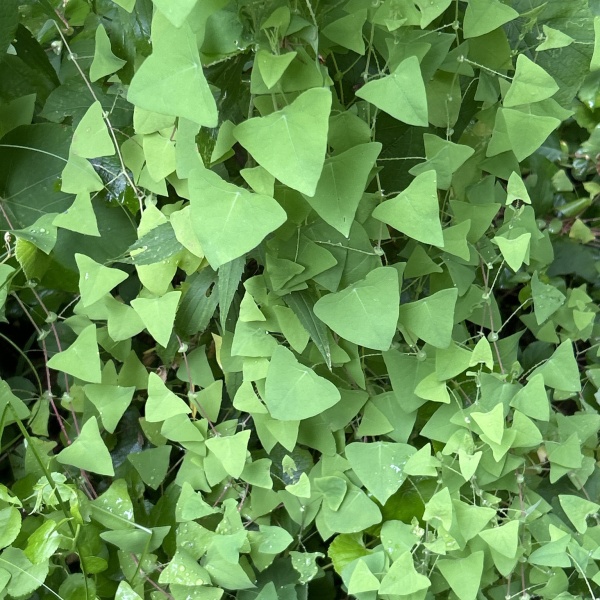
Foliage -
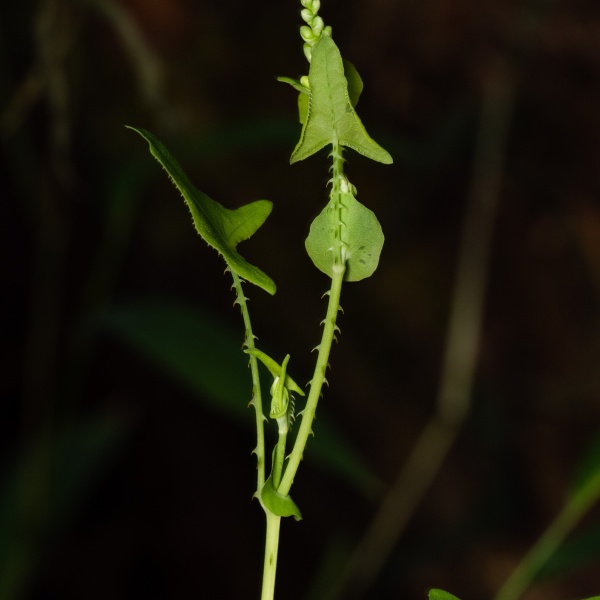
Prickles -
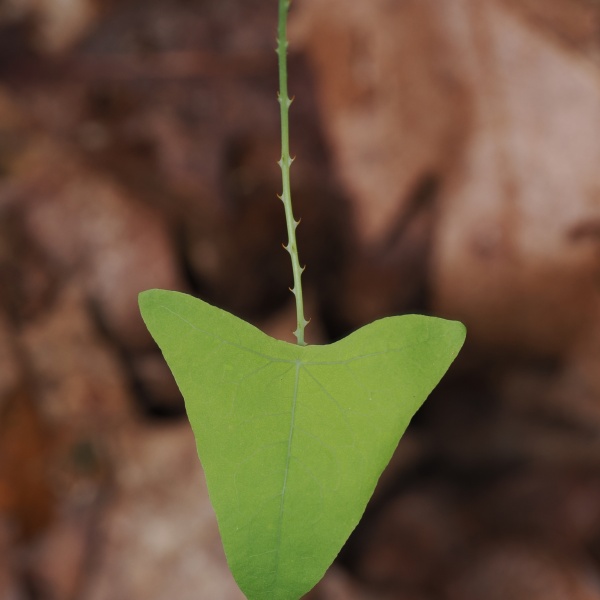
Leaf -
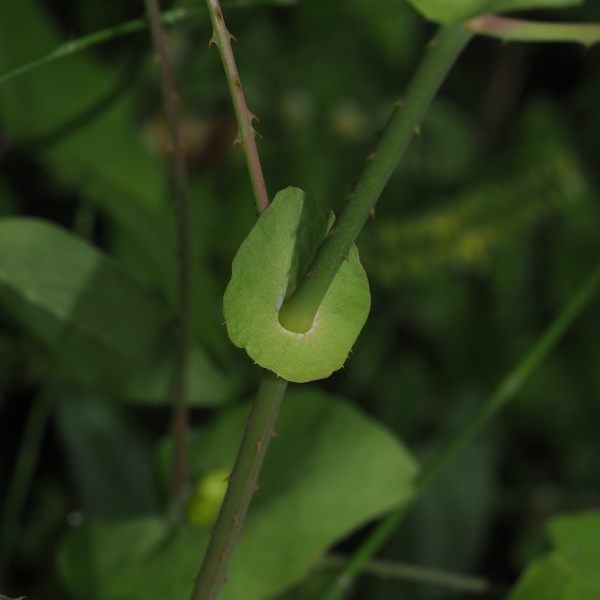
Leafy sheath -
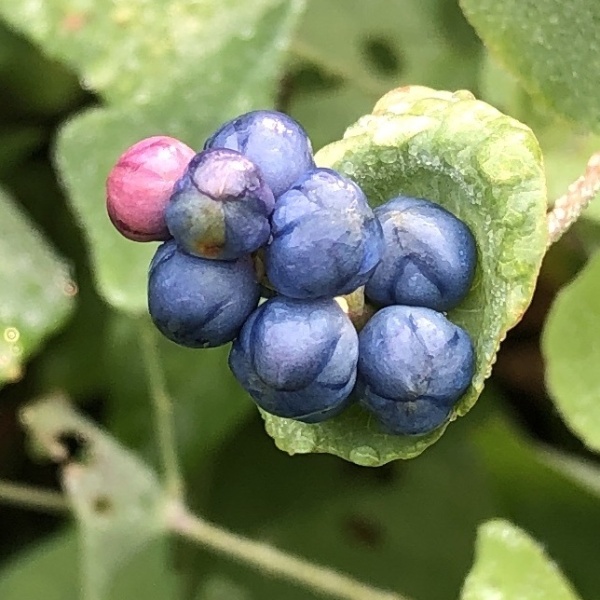
Fruit -
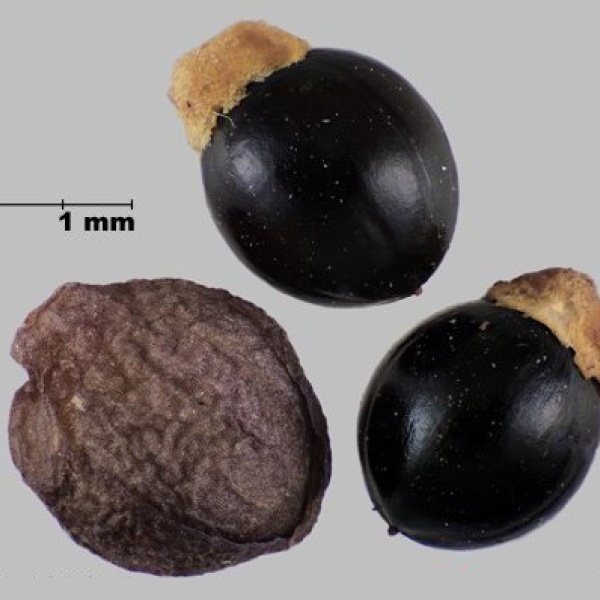
Seeds
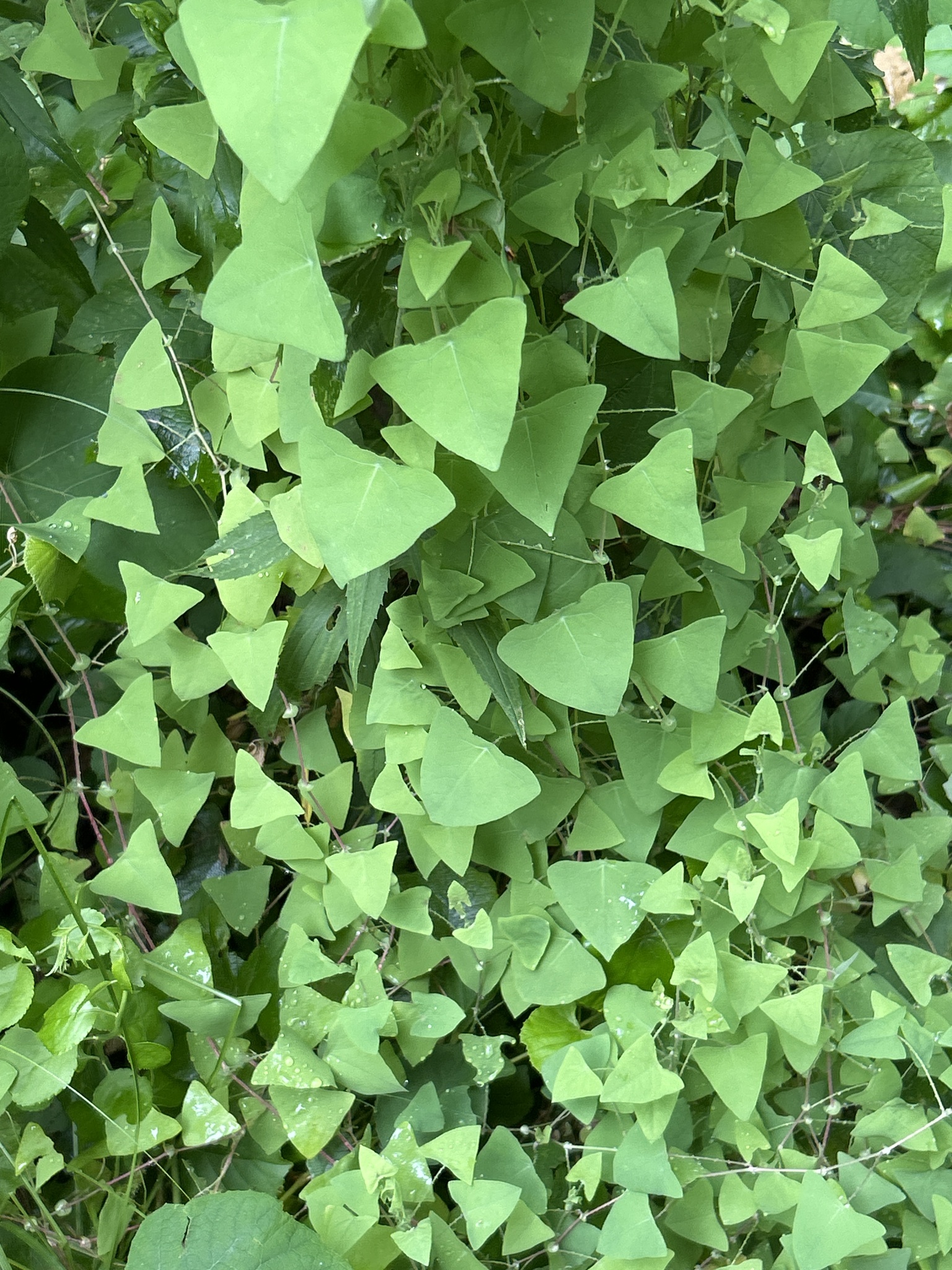

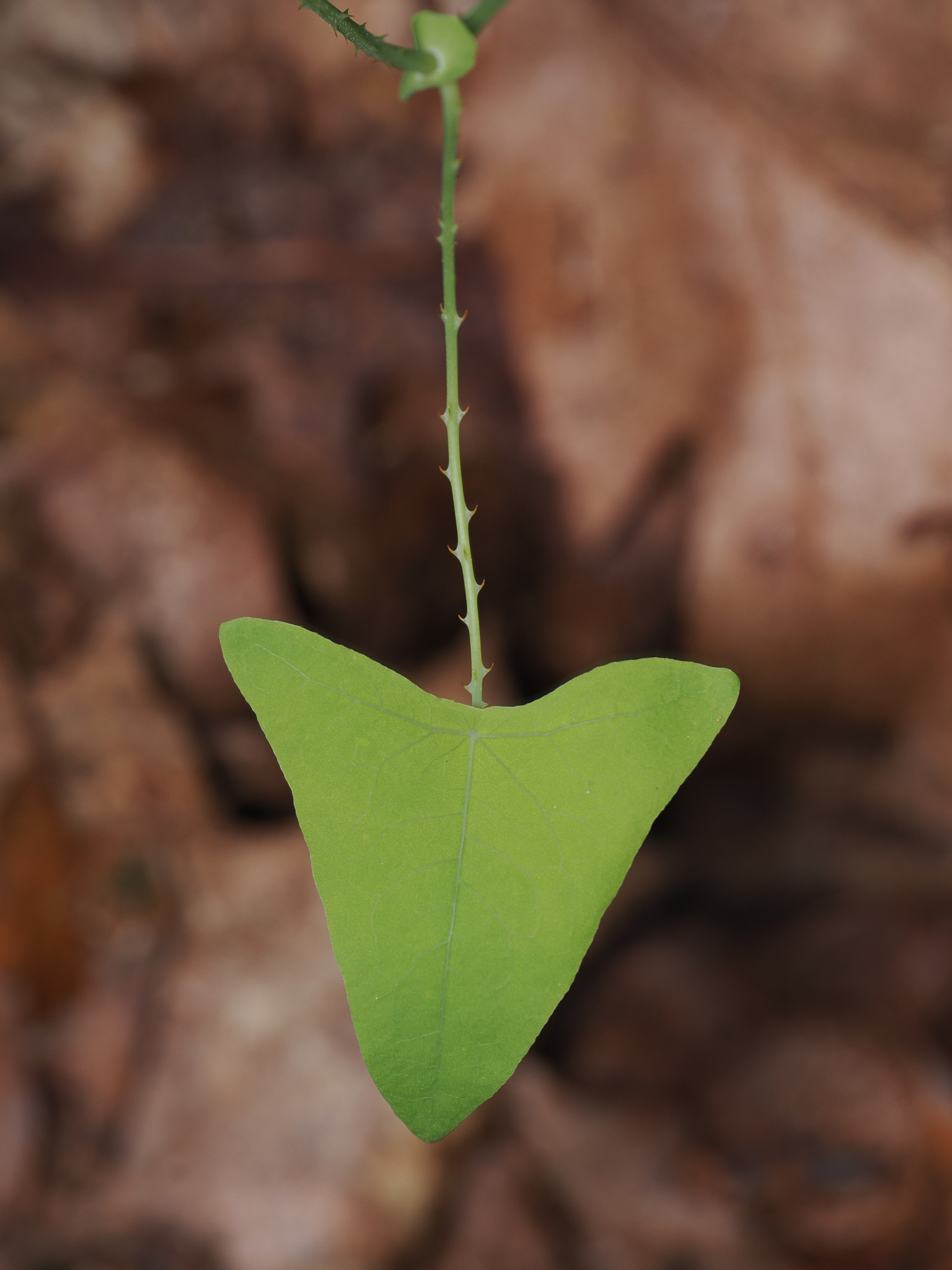
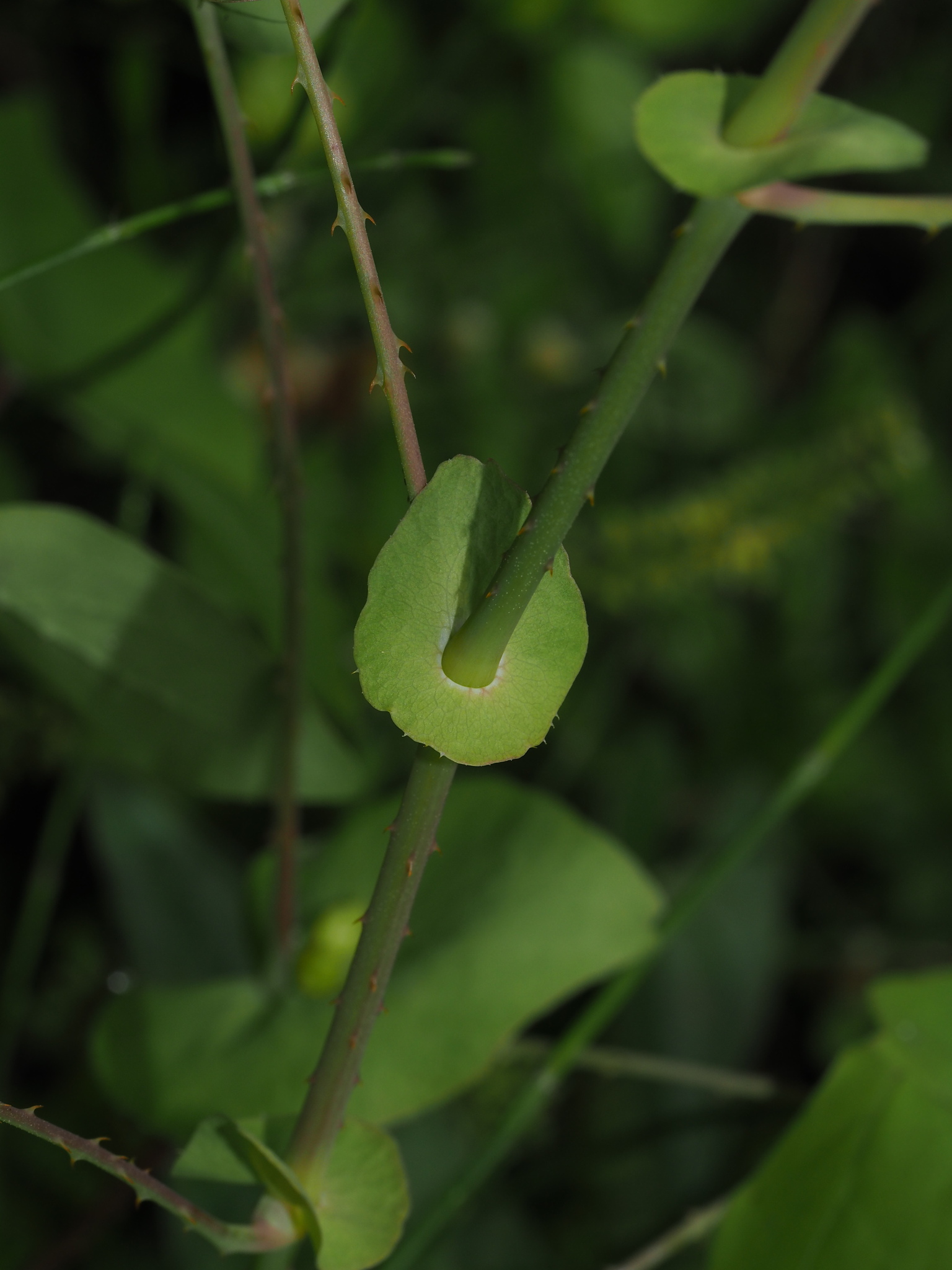
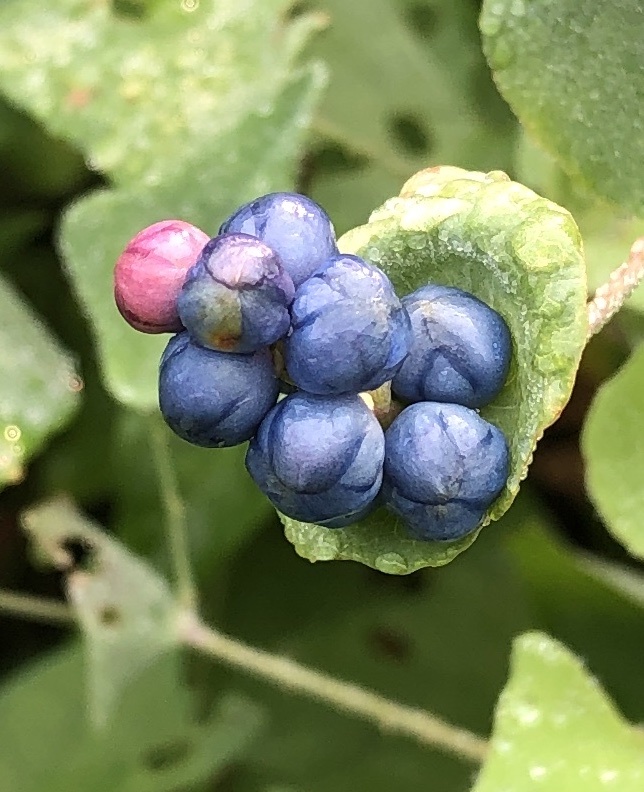

Devil's-tail tearthumb is a sprawling annual or perennial vine with thin, prickly stems. Backward-curved barbs are present on its stems and leaves. The species has distinctive triangular leaves and cup-shaped ocreae (leafy sheaths) surrounding its flowers and nodes. The small flowers are white or pink. The species produces metallic blue berries.
How it spreads
Devil's-tail tearthumb reproduces by seed. It is known for its remarkably rapid vegetative growth. People may unintentionally transport devil's-tail tearthumb with nursery stock. The seeds may be transported in root balls, or the vines may be wound around stems. People may also transport the seeds in association with ornamental seed, hay, mulch, vehicles, equipment, clothing and baggage. It can also spread in nature by water, ants, birds, small mammals and deer.
What you can do
- Leave natural items in their natural habitats
- Brush off clothing and clean footwear and camping gear to avoid spreading seeds and plant material
- Use clean, high quality seed that is certified if possible
- Ensure machinery, vehicles and tools are free of soil and plant parts before moving them from one area to another
- If you think you've spotted it in Canada, report a devil's-tail tearthumb sighting to the Canadian Food Inspection Agency. We will follow up and determine if further action is needed.
What we are doing
Devil's-tail tearthumb is regulated as a pest in Canada under the Plant Protection Act. It is also listed as a prohibited noxious weed in the Weed Seeds Order, 2016 under the Seeds Act. Importation and domestic movement of regulated plants and their propagative parts is prohibited.
- RMD-13-04: Consolidated Pest Risk Management Document for pest plants regulated by Canada
- D-12-01: Phytosanitary Requirements to Prevent the Introduction of Plants Regulated as Pests in Canada
More information
- Weed seed: Devil's-tail tearthumb
- Invasive plants field guide
- Learn more about invasive species