
Dutch elm disease (DED) is caused by a fungus, Ophiostoma ulmi (Buisman) and Ophiostoma novo-ulmi (Brasier), which blocks the tree's ability to conduct water and causes the tree to die. All species of American elm (Ulmus americana), rock elm (Ulmus thomasii) and slippery elm (Ulmus rubra) are highly susceptible.
How it spreads
The fungus is mainly spread by three species of elm bark beetles:
- the smaller European, Scolytus multistriatus (March)
- the banded, Scolytus schevyrewi and
- the native Hylurgopinus rufipes (Eichh)
Spread can also occur when the roots of an infected tree connect to an uninfected, neighbouring tree underground, a natural process known as root grafting. The movement of infected elm materials can result in spread of DED.
Elm bark beetles are attracted to:
- freshly pruned trees
- sick trees
- weak trees
- dying elm trees
The larvae develop in the inner bark. Adults that emerge from infected trees will fly to healthy trees and infect them with the fungus, causing the disease to spread.
Where it's found
The disease now occurs in most of the natural range of Ulmus americana from Saskatchewan to the Maritimes. The Provinces of Alberta and Newfoundland and Labrador continue to maintain their DED-free status. British Columbia is considered partially infested with Dutch elm disease. The Provinces of Manitoba, New Brunswick, Nova Scotia, Ontario, Prince Edward Island, Quebec and Saskatchewan are regulated areas and considered to be generally infested.
In 2025, DED detections were confirmed in:
- the City of Edmonton, Alberta
- the City of Saskatoon, Saskatchewan
In 2024, DED detections were confirmed in:
- the Kootenay Boundary Regional District in British Columbia
- the City of Edmonton, Alberta
In response to these detections, we have updated our regulated area for Dutch elm disease to include parts of the Regional Districts of Kootenay Boundary and Central Kootenay and the entire Province of Saskatchewan. Alberta continues to be considered non-infested due to ongoing eradication measures. We are working with provincial ministries and municipal governments to determine any additional measures needed for surveillance and mitigation of Dutch elm disease in each province.
How to spot it
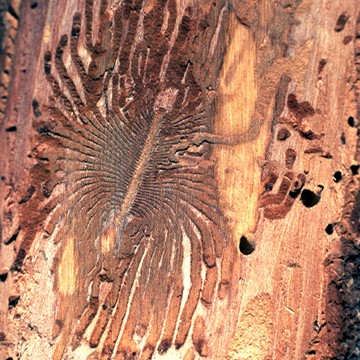
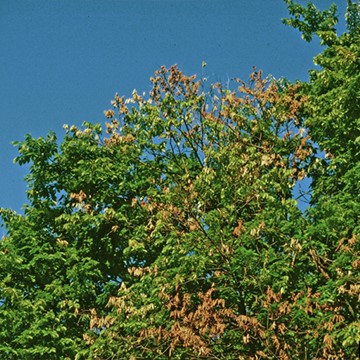
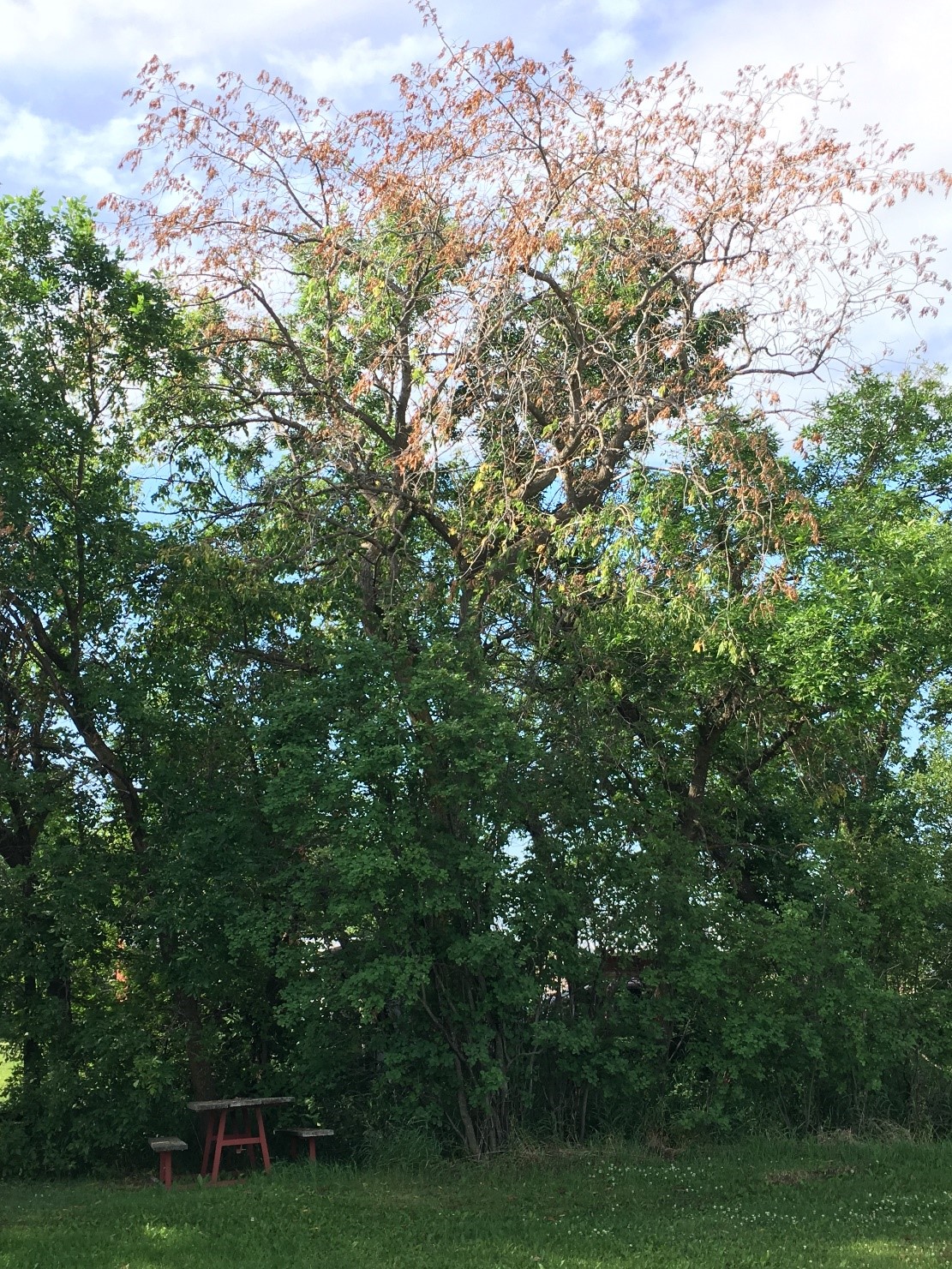

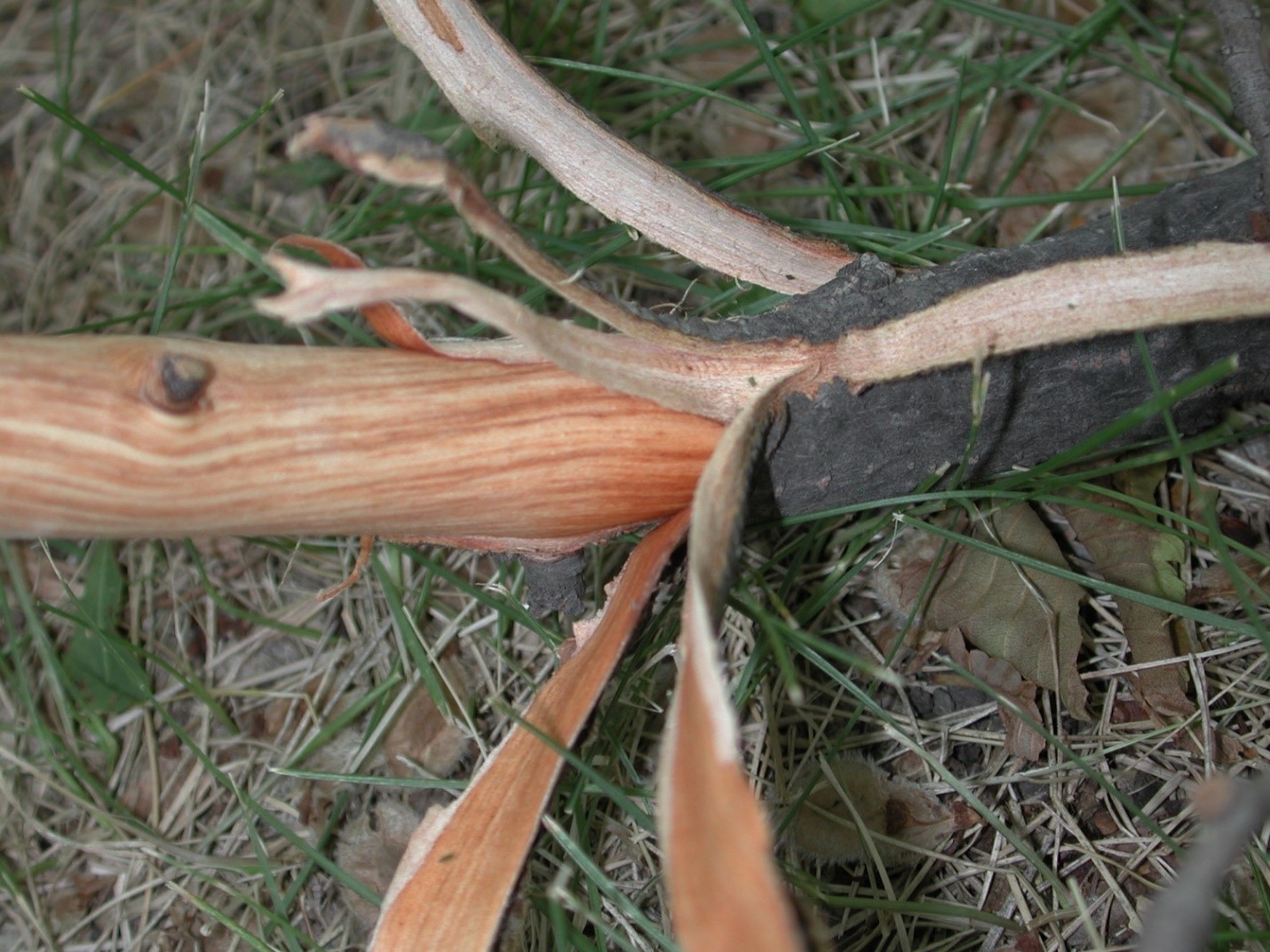
Starting in mid-June, look for the following:
- Flagging: wilted leaves in the upper crown will curl, shrivel and turn brown by late June or July and often remain attached to the tree into winter
- Staining in the sapwood. Elm trees infected with Dutch elm disease may have red streaks through the sapwood
Elm pruning bans
It is illegal to prune elm trees in the following provinces during periods when elm bark beetles are active. Pruning the trees creates wounds that can attract the beetles and cause the disease to spread.
- Alberta from April 1 to September 30
- Saskatchewan from April 1 to August 31
- Manitoba from April 1 to July 31
Elm species should not be pruned anywhere in Canada from April 1 to September 30 to reduce the risk of further spread within regulated areas and areas free of Dutch elm disease.
What you can do
- Learn to identify elm trees and locate them around your property
- Take steps to keep trees in good health
- Follow municipal or provincial elm wood regulations and guidelines when disposing of elm wood so you don't spread the beetles or the fungus.
- Don't store or transport untreated elm firewood
Moving firewood is one of the highest risk pathways for accidentally introducing Dutch elm disease into pest-free areas. - Report signs of Dutch elm disease
Branch samples may need to be taken by a trained arborist to determine if an elm is actually infected with this disease.
Report a sighting of dutch elm disease
More information
- Don't move firewood
- D-97-07: Phytosanitary requirements for the importation from the United States and domestic movement of elm material to prevent the introduction and spread of Dutch elm disease within Canada
- D-01-12: Phytosanitary requirements for the importation and domestic movement of firewood
- Provincial websites on Dutch elm disease:
Contact your local CFIA office for additional information.