
ISSN: 2563-0261
Every year, we conduct surveys to support plant health in Canada.
Our Plant Health Survey Program supports plant health by detecting new pests and by monitoring the spread of established pest populations, forming the basis for sound regulatory decisions. Surveillance data collected by trapping, visual inspection and sampling efforts contribute to policy development and trade negotiations. Plant health surveillance activities also support Canada in meeting the International Standards for Phytosanitary Measures.
These survey results were collected between April 1, 2025, to March 31, 2026.
This page will be updated to add the survey results for other pests.
Survey results
Forest pests
Oak wilt
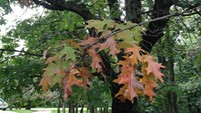
Oak wilt (Bretziella fagacearum) is a vascular wilt disease that is capable of killing trees in a single season. It was first recognized as an important forest pest in 1944 in Wisconsin and is now known to occur in 24 states within the U.S. In 2023 oak wilt was detected for the first time in Canada, at 3 locations in Ontario. An active management plan was implemented to support eradication of the disease at these locations. Oak wilt is spread from diseased to healthy trees through:
- root grafting
- oak bark beetles
- sap beetles
All oak species are susceptible to oak wilt, but red oaks are more frequently infected and can die quite quickly. The primary goal of this survey is the early detection of the pest in areas where it is not known to occur.
Method: visual inspection
This survey consists of a visual inspection of host trees for signs and symptoms of oak wilt. Surveys focus on areas where oak wilt could have been introduced through human-assisted movement of infected commodities from infested areas. An emphasis is placed on:
- campgrounds where oak firewood may be transported from infected areas
- mills or other facilities importing oak logs
- disposal sites
- areas where recent weather events may have damaged limbs/trees
Results from 129 surveyed sites
| Provinces | Number of sites surveyed | Results |
|---|---|---|
| Manitoba | 5 | No detections |
| Ontario | 57 | No new detections |
| Quebec | 47 | No detections |
| New Brunswick | 8 | No detections |
| Nova Scotia | 10 | No detections |
| Prince Edward Island | 2 | No detections |
| Canada | 129 |
Oak wilt was not detected in 2025. We assessed more than 104 public reports for oak wilt and followed up with site visits when appropriate. Delimitation surveys were completed around the 3 sites where the pathogen was detected in 2023 in Ontario. Oak wilt was not detected. |
Map of results
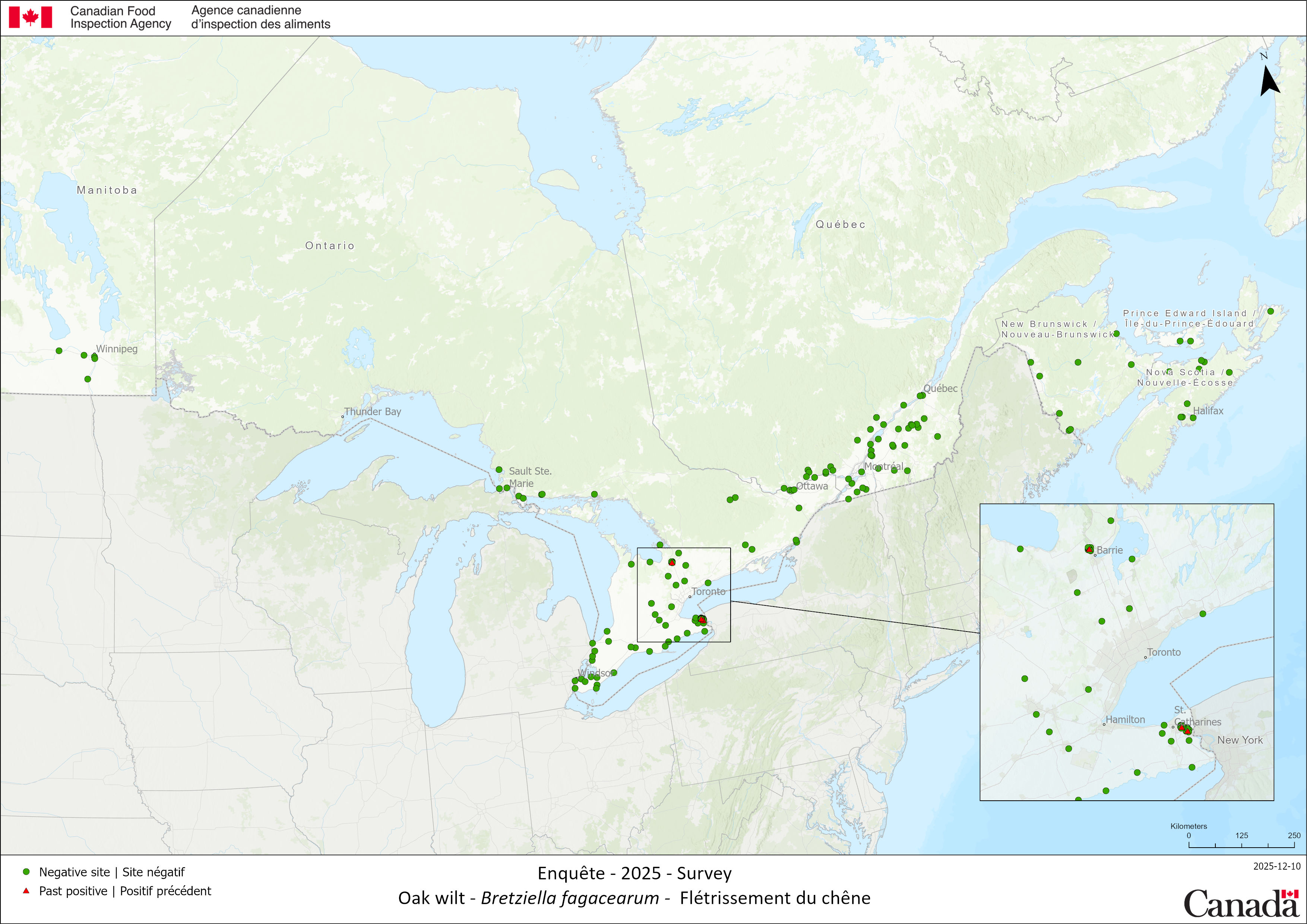
The map shows the locations of 129 sites that were surveyed for oak wilt in 2025 in the provinces of:
- Manitoba (sites are located in the southeast corner of the province, around the Winnipeg area)
- Ontario (sites are mostly located in Southern Ontario, with some in Eastern Ontario and a small cluster of sites around Sault Ste-Marie)
- Quebec (sites are mostly located between Gatineau and Montreal and all along the St. Lawrence Lowlands, up to Quebec City)
- New Brunswick (sites are scattered across the southern half of the province)
- Nova Scotia (sites are mostly located on the northern part of the province)
- Prince Edward Island (sites are located in the eastern half of the province)
The map also shows the 3 positive sites from 2023 in the municipalities of:
- Niagara Falls
- Niagara-on-the-Lake
- township of Springwater
Horticulture pests
Ramorum blight
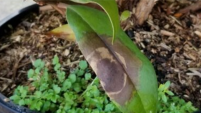
Ramorum blight (Phytophthora ramorum) is a plant pathogen that causes a disease known as ramorum blight on a wide variety of nursery plants. It has also been associated with a disease of oak, known as "Sudden Oak Death", that was first observed in coastal California in the mid-1990's. Since 2003, ramorum blight has been detected in a number of retail/wholesale nurseries in the southern coastal area of British Columbia. The primary goal of this survey is to provide information on the national status of this disease in Canadian nurseries. Additional surveys are conducted to support eradication activities following a new detection. Sites with detections are also surveyed for 2 years following an eradication in order to confirm the success of the eradication.
Method: visual inspection
The focus of this survey is to visually inspect high-risk host plants at target facilities and to collect samples with symptoms consistent with expression of ramorum blight infection. The survey targets nurseries that propagate the host plants listed in D-01-01: Phytosanitary requirements to prevent the entry and spread of Phytophthora ramorum and nurseries that grow ramorum blight host plants beyond the year of import or propagation, including wholesale nurseries.
Results from 23 surveyed sites
| Provinces | Number of sites surveyed | Results |
|---|---|---|
| British Columbia | 11 | Detection at 1 nursery on Vancouver Island. |
| Ontario | 10 | No detections |
| Quebec | 2 | No detections |
| Canada | 23 | Regulatory measures have been implemented at the infested nursery and an eradication protocol was initiated. |
Map of results
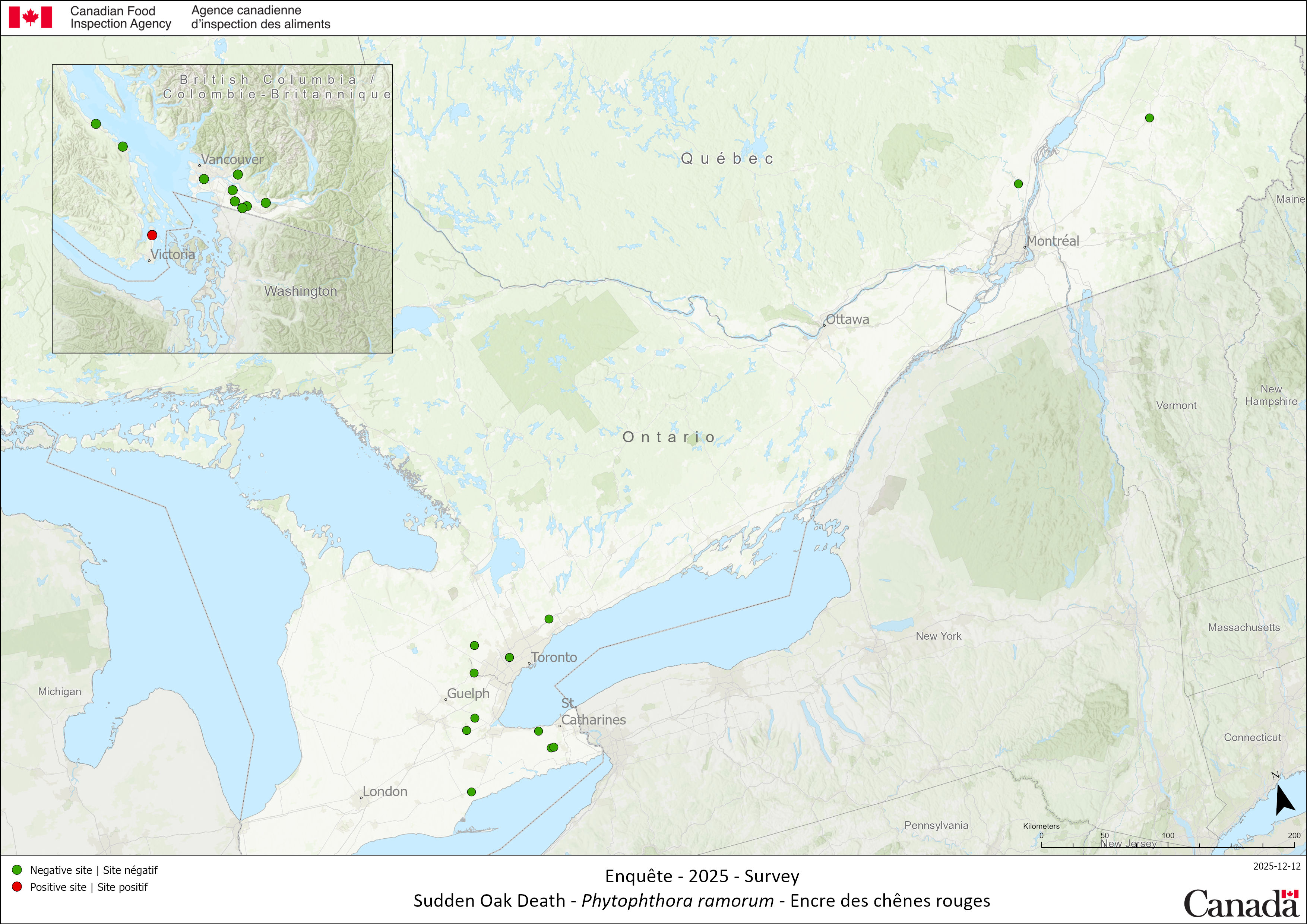
The map shows the locations of 23 sites that have been surveyed for ramorum blight in 2025 in the provinces of:
- British Columbia (sites are located on the island of Vancouver and in the Lower Mainland)
- Ontario (sites are located in the Niagara peninsula, close to Simcoe, Hamilton and in the greater Toronto area)
- Quebec (sites are located close to Joliette and close to Victoriaville)
The map also shows one positive site located on Vancouver Island, BC.
Plum pox virus

Plum pox virus (Potyvirus plumpoxi) is a serious plant disease that affects many stone fruit species within the genus Prunus, including:
- peaches
- nectarines
- plums
- apricots
- almonds
- some ornamental varieties
Although it does not kill trees, it:
- reduces the marketability of the fruit
- causes early fruit drop in infected trees
- drastically reduces fruit yields
Plum pox virus is present in parts of the Niagara Region and the City of Hamilton, Ontario, where a regulated area has been established. This survey is being conducted in support of policies and programs related to D-99-07: Policy for importation from the United States and domestic movement of plum pox virus susceptible Prunus propagative plant material.
Method: leaf sampling
Leaf sampling surveys take place at select orchard and residential properties to ensure continued monitoring along the boundary of the plum pox virus regulated area. Depending on the location and site type, these activities are performed on a rotational basis, taking place every 1 to 3 years.
Results from 148 sites surveyed
| Provinces | Number of sites surveyed | Results |
|---|---|---|
| Ontario | 148 |
22 orchards and 126 residential properties were visited and sampled. Plum pox virus was not detected. |
Blueberry maggot
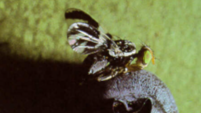
The blueberry maggot (Rhagoletis mendax) is an indigenous pest of commercially grown lowbush and highbush blueberries in the Canadian Maritime Provinces. It is currently found in:
- Nova Scotia
- New Brunswick
- Prince Edward Island
- parts of Ontario
- parts of Quebec
It is not found in Newfoundland and Labrador or in western Canada.
Method: traps
This survey uses baited traps which are attractive to male and female blueberry maggot adult flies. Multiple traps are placed within blueberry plantations and wild sites containing host species in areas not regulated for blueberry maggot. Traps are installed prior to the pest's flight period in late June and collected at the end of harvest or fruit drop, in late August or early September.
Results from 55 sites surveyed
| Provinces | Number of sites surveyed | Results |
|---|---|---|
| British Columbia | 18 | No detections |
| Ontario | 14 | No new detections outside the known infested areas. |
| Quebec | 4 | No new detections outside the known infested areas. |
| Newfoundland and Labrador | 19 | No detections |
| Canada | 55 | Regulated areas remain unchanged. |
Map of results
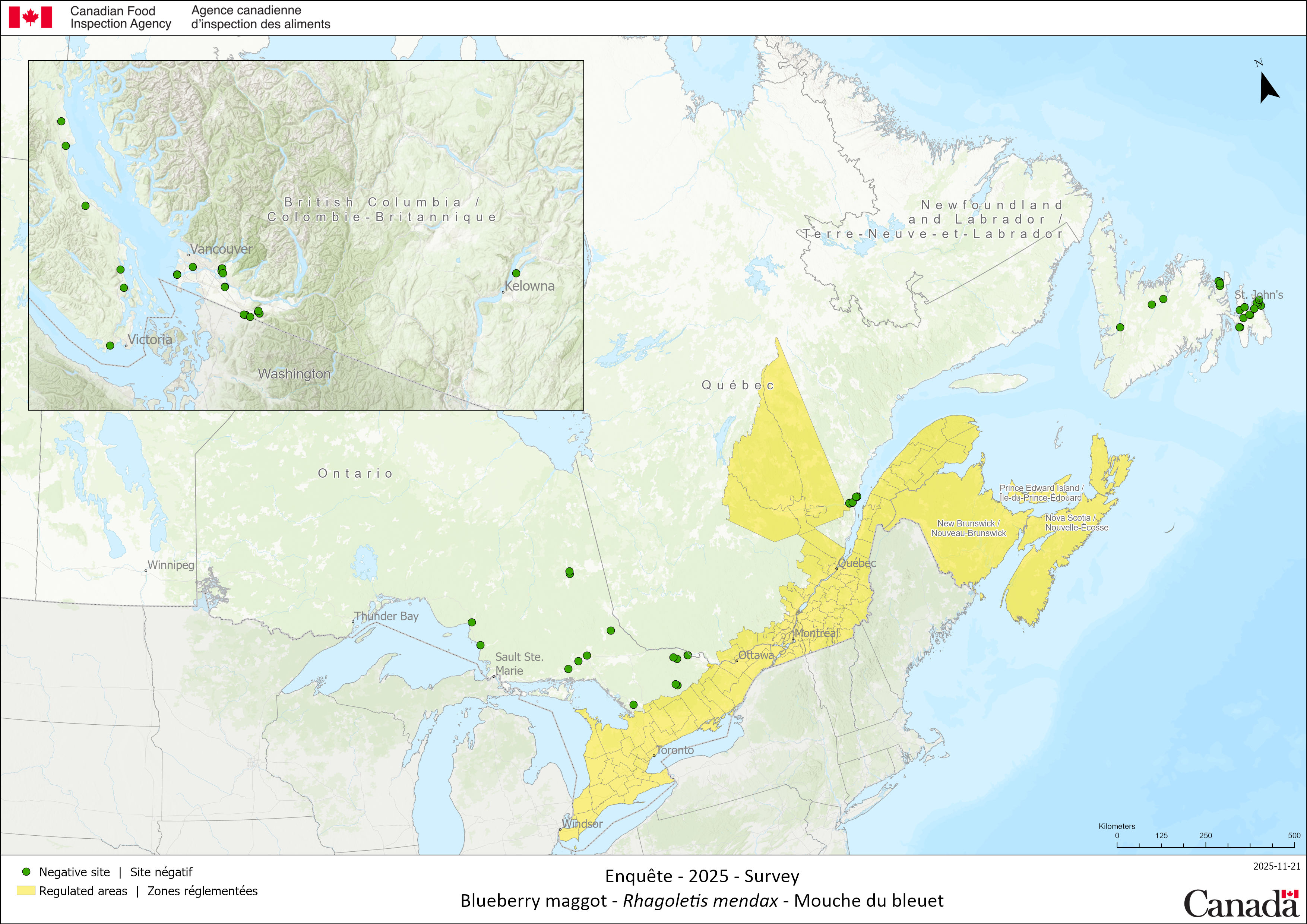
The map shows 55 sites that have been surveyed for blueberry maggot in Canada in 2025, in the provinces of:
- British Columbia (sites are mainly located in the Lower Mainland and on the southeastern coast of Vancouver Island)
- Ontario (sites are located in Northeastern Ontario)
- Quebec (sites are located close to Tadoussac)
- Newfoundland and Labrador (sites are mostly located on the Avalon peninsula and a few sites are scattered across the rest of the province)
The regulated areas for the blueberry maggot are also shown and cover the entire provinces of:
- New Brunswick
- Nova Scotia
- Prince Edward Island
and parts of
- Ontario (southern Ontario)
- Quebec (St. Lawrence lowlands, Gaspesie, and a large area surrounding Lac-St-Jean)
Apple maggot
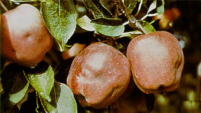
Apple maggot (Rhagoletis pomonella) is an indigenous pest of apples in Canada. The BC Interior is the last major apple growing area of North America free from this pest. The objective of this survey is the early detection of apple maggot to maintain the pest-free area of the BC Interior. This survey is being conducted in support of policies and programs related to CFIA policy directive D-00-07: Phytosanitary requirements to prevent the introduction and spread of apple maggot. In 2015, a single female apple maggot was detected in West Kelowna and in 2016 another single female was detected in the city of Kelowna. Despite increased surveillance from 2016 to 2019 apple maggot has not been detected since 2016.
Method: traps
This survey is conducted using sticky red spheres baited with an attractant and placed in host plants between June and September, when adult apple maggot flies are active. Traps are deployed to give an optimal coverage of known pome fruit production areas and associated urban and rural properties with suitable hosts, as well as riparian areas. The survey also includes selected sites that are perceived to be high risk for introduction of the pest.
Results from 221 surveyed sites
| Provinces | Number of sites surveyed | Results |
|---|---|---|
| British Columbia | 221 |
No new detections in the pest free area and outside the known infested areas. The pest free area in the interior of British Columbia is considered free from apple maggot. |
Map of results
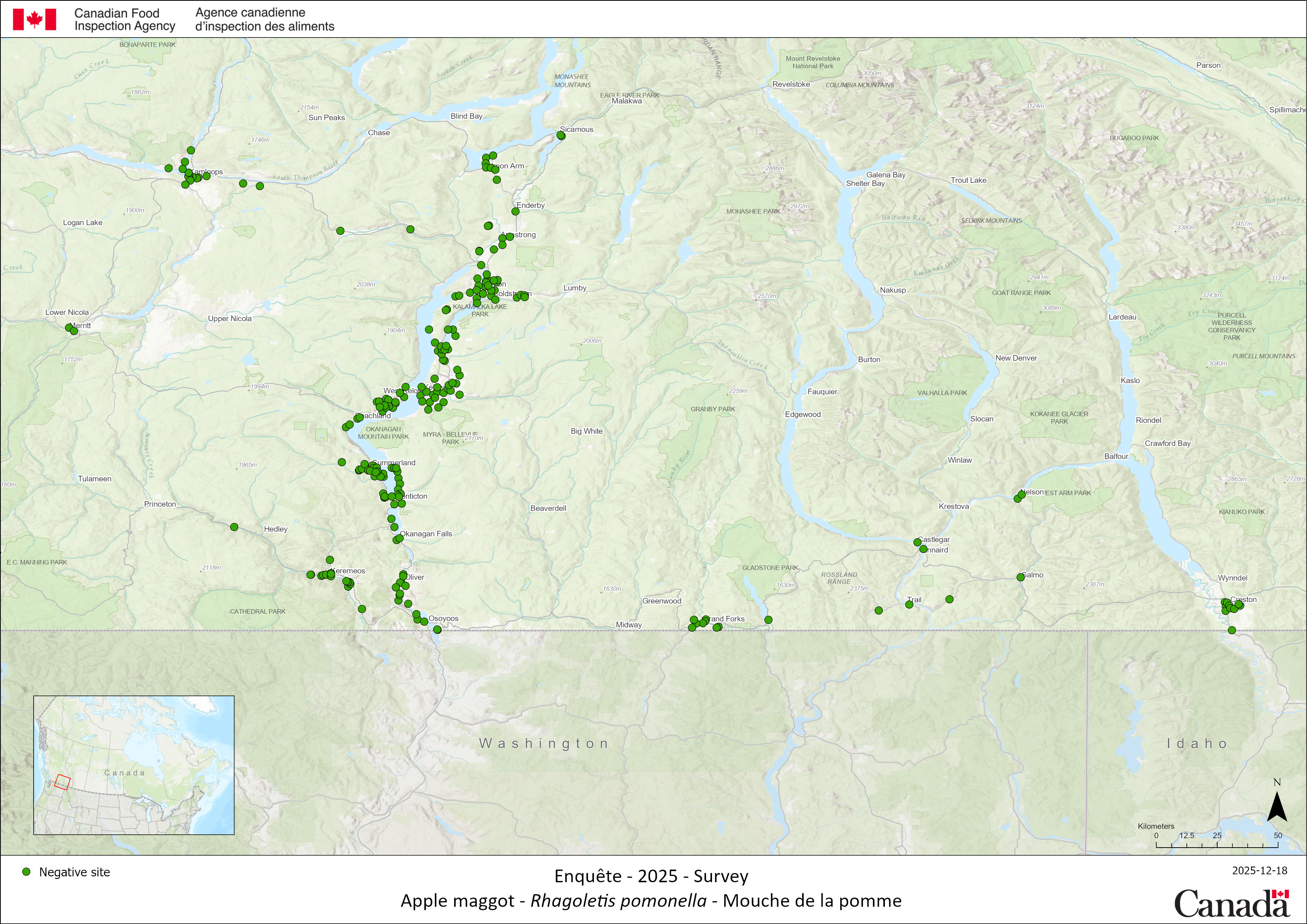
The map shows 221 sites that have been surveyed for apple maggot in British Columbia, Canada, in 2025. The sites are mostly located in the Okanagan valley, around Kamloops and in the Kootenay-Boundary region, in proximity to the USA-Canada border.
About Us
Contact us
For any questions regarding CFIA's plant protection surveys, contact the Plant Health Surveillance Unit: cfia.surveillance-surveillance.acia@inspection.gc.ca.