
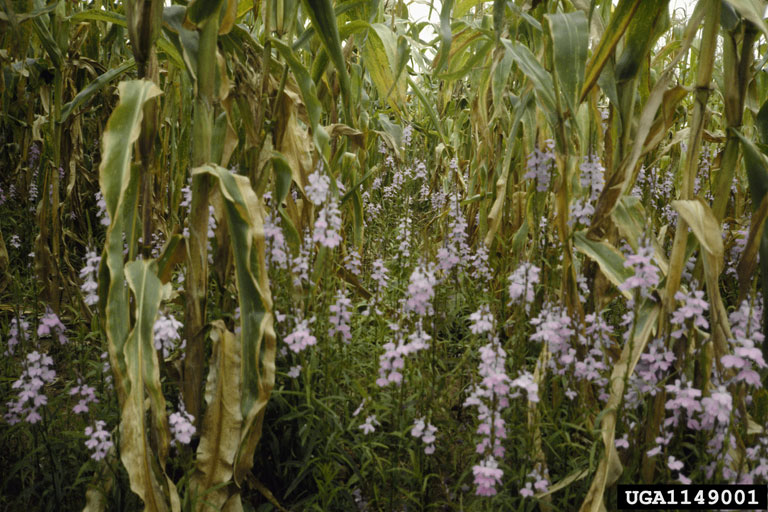
Witchweeds (Striga spp.) are a group of root parasites in the broomrape family (Orobanchaceae). They are serious agricultural pests of cereals and legumes. Witchweeds divert sugars and water from their hosts thereby weakening plants and reducing yields. Most problems globally are attributed to purple witchweed (Striga hermonthica), Asiatic witchweed (Striga asiatica) and cowpea witchweed (Striga gesneroides).
Where they're found
There are no witchweed species reported in Canada. The genus contains 30 to 40 species mostly native to semi-arid, tropical areas of Africa. Asiatic witchweed and cowpea witchweed have been introduced into the United States. Witchweeds generally prefer infertile soils in semi-arid tropical grasslands but can also grow in temperate regions. As they are obligate parasites and require host plants to survive, many species have co-evolved with their hosts and have narrow host ranges. The economically important species are particularly harmful in cereals such as: corn, rice, sorghum, and legumes such as cowpeas.
How to spot them
-

Purple witchweed infestation -

Purple witchweed flowers -

Asiatic witchweed flowers -

Witchweed root connections -

Witchweed seed capsules -

Asiatic witchweed seeds
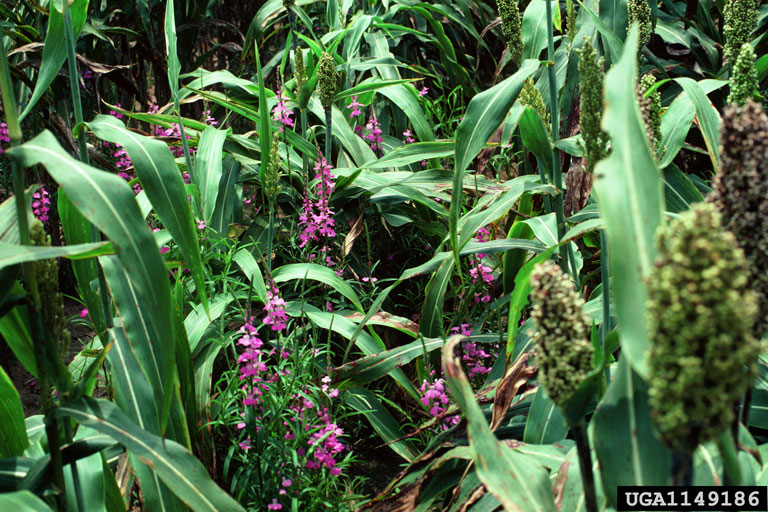
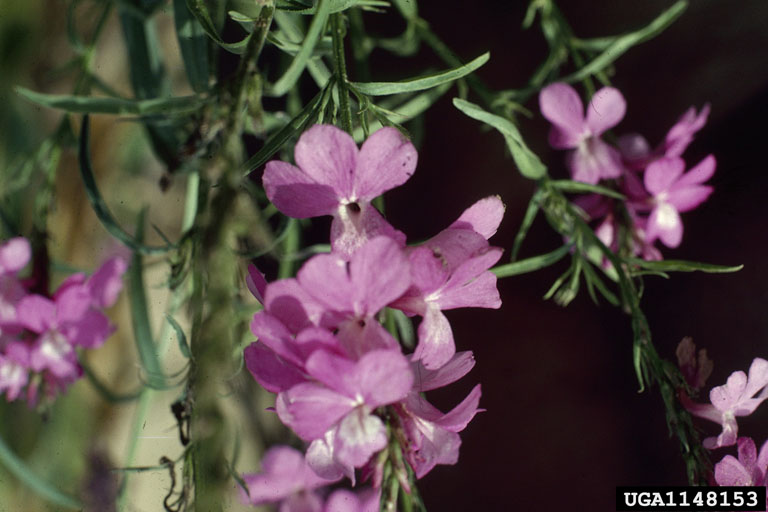
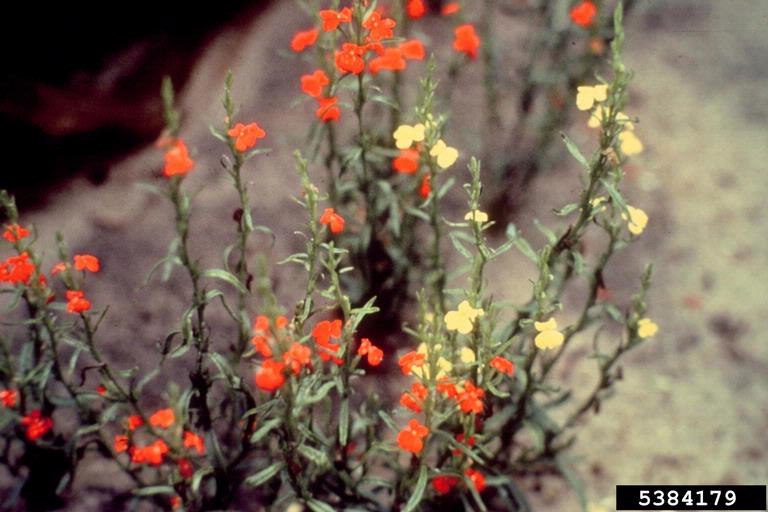
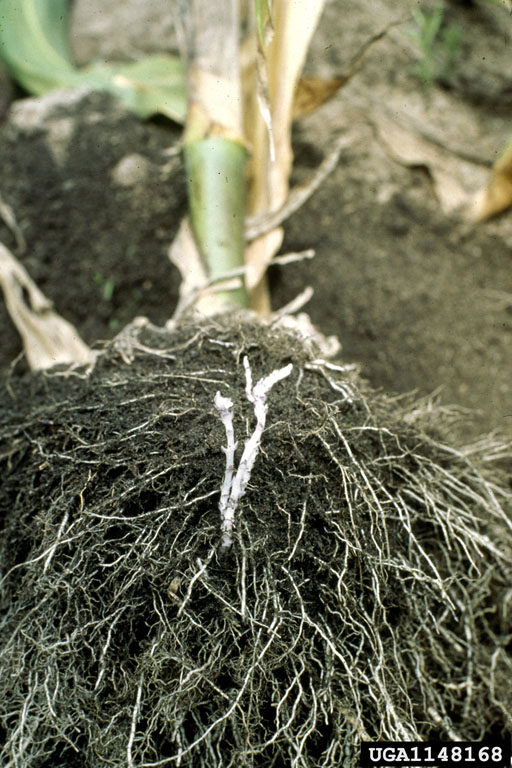
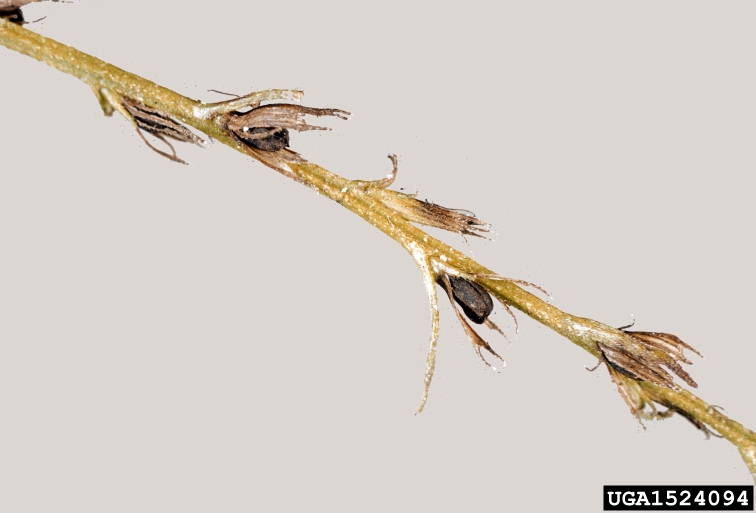
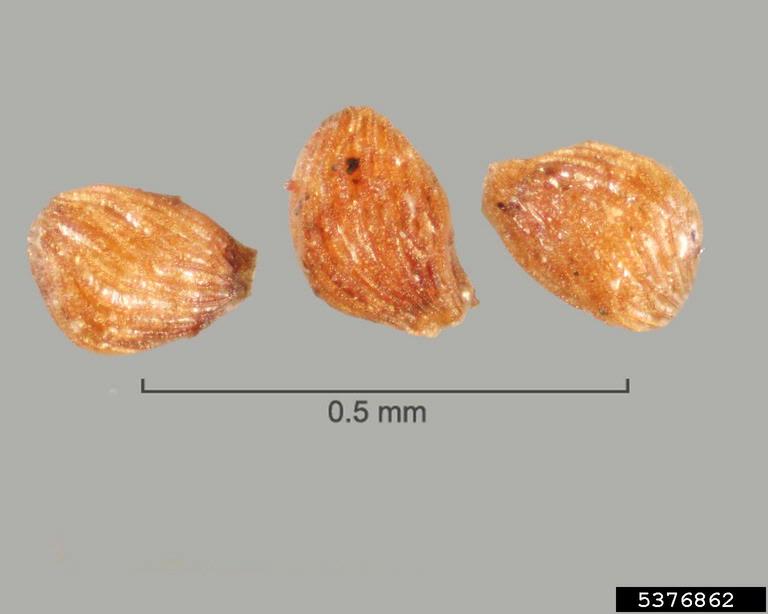
Witchweed roots are white, succulent, hairless and attach to their hosts via suckers. Stems vary in colour from brown to bright green and are between 15 and 50 cm tall. Leaves are opposite, narrowly lance-shaped and about 1 to 3 cm long, with successive pairs perpendicular to one another. Flowers occur in clusters near the tips of stems. Individual flowers are small, stalkless, irregular and vary widely in colour, for example: red, orange, yellow, pink, white, blue or violet. Fruits are 5-sided capsules, have narrow wings and contain hundreds of seeds. Seeds are tiny, dust-like, egg-shaped to oblong and have a net-like seed coat.
How they spread
Witchweeds produce thousands of tiny seeds. These seeds may be dispersed with seed and grain, or by soil movement, other human activities, or adhering to animals, through feet, fur or feathers. Seed can also naturally spread by wind and water.
What you can do
- Ensure machinery, vehicles and tools are free of soil and plant parts before moving them from one area to another
- Brush off clothing and clean footwear to avoid spreading seeds and plant material
- Use clean and high quality seed that is certified if possible
- Use clean grain, hay and straw
- If you think you've spotted it in Canada, report a witchweed sighting to the Canadian Food Inspection Agency
We will follow up and determine if further action is needed.
What we are doing
Striga spp. are regulated as pests in Canada under the Plant Protection Act. Importation and domestic movement of regulated plants and their propagative parts is prohibited.
More information
- Invasive plants field guide
- Learn more about invasive species