
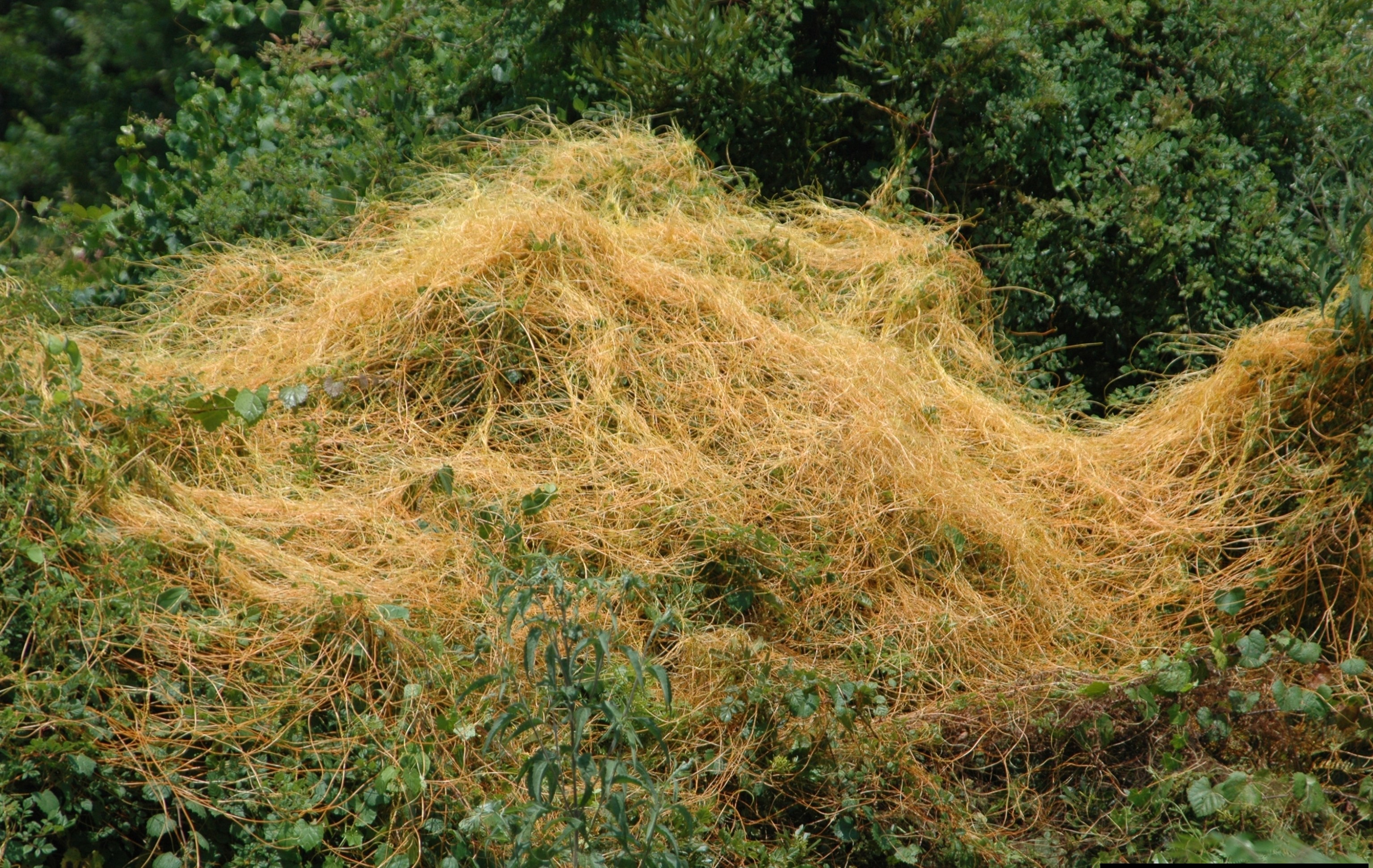
Dodders (Cuscuta spp.) are annual or perennial parasitic vines in the morning glory family (Convolvulaceae). There are about 200 species worldwide, most native to North and South America, where they play important roles in natural habitats. About 15 to 20 species are major plant pests globally. They attack many types of plants, including crops and ornamentals. Dodders attach to host stems using specialized structures that draw nutrients, weaken the host and reduce yields.
Where they're found
Canada has 12 dodder species: 9 are native and 3 are non-native. Dodders grow in many different habitats. They are obligate parasites, meaning they must attach to a host to survive. Some species attack many types of plants from different families (generalists), while others only attack a few specific hosts (specialists). Dodder species of economic concern can parasitize a wide range of cultivated crops, including alfalfa, clover, faba beans, chickpeas, flax, sugar beet, potatoes, carrots and cranberries. They may be found on crop plants or on other hosts in field margins and surrounding areas.
How to spot them
-

Alfalfa dodder (Cuscuta approximata) stems and flowers on host -

European dodder (Cuscuta europaea) stems -
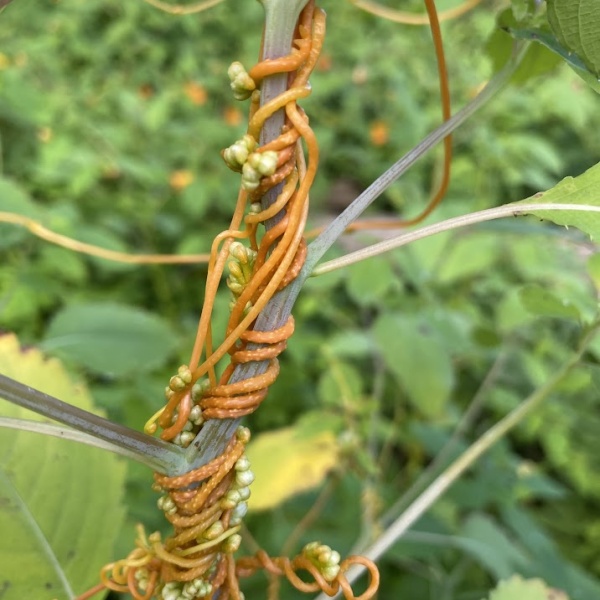
Swamp dodder (Cuscuta gronovii) stem entwined on host stem -

Alfalfa dodder (Cuscuta approximata) flowers -
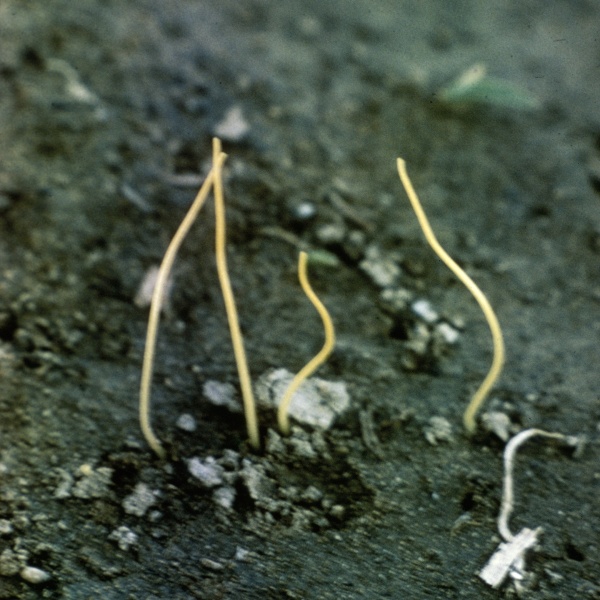
Dodder seedlings -

Chinese dodder (Cuscuta chinensis) seeds
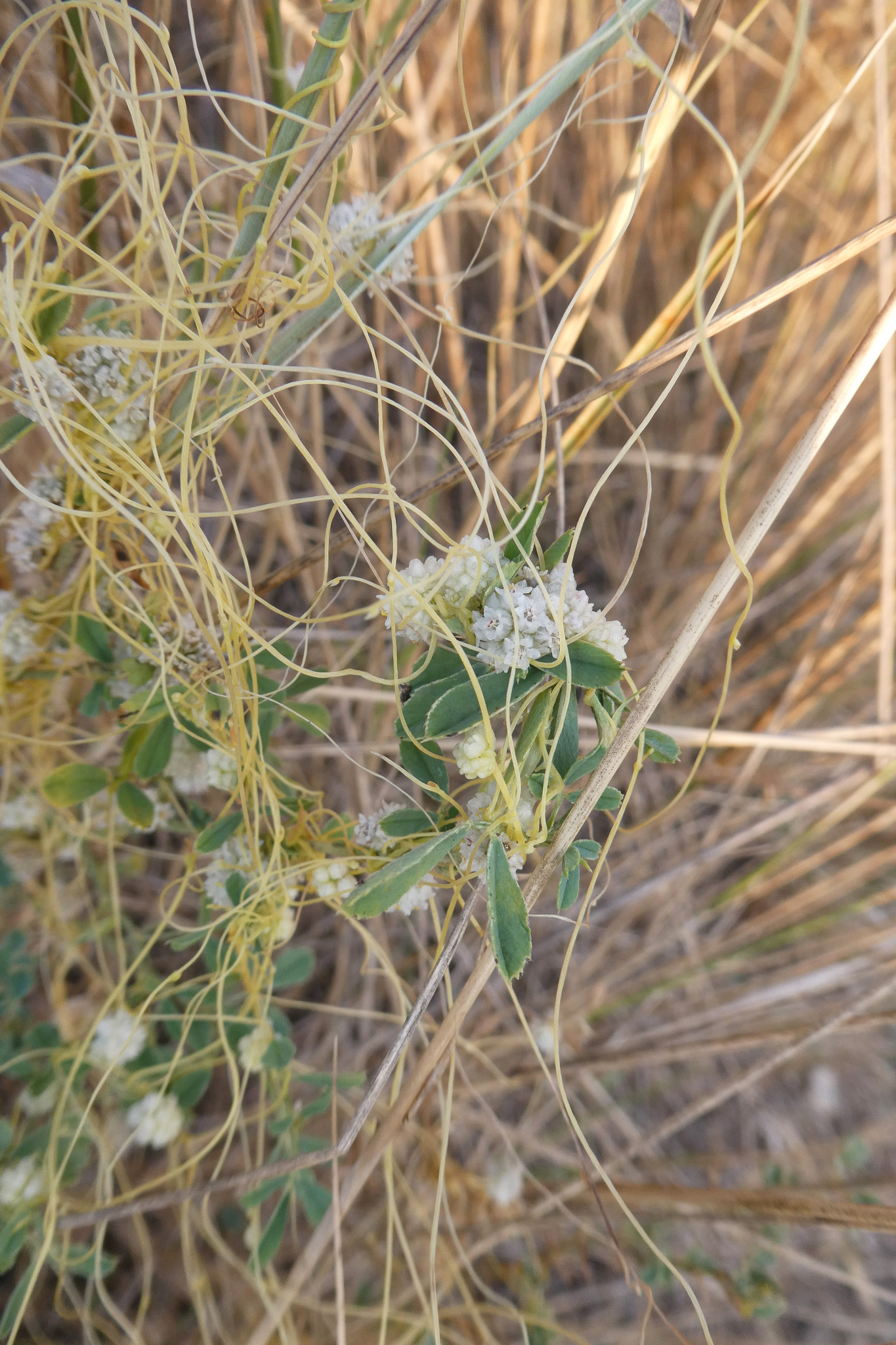
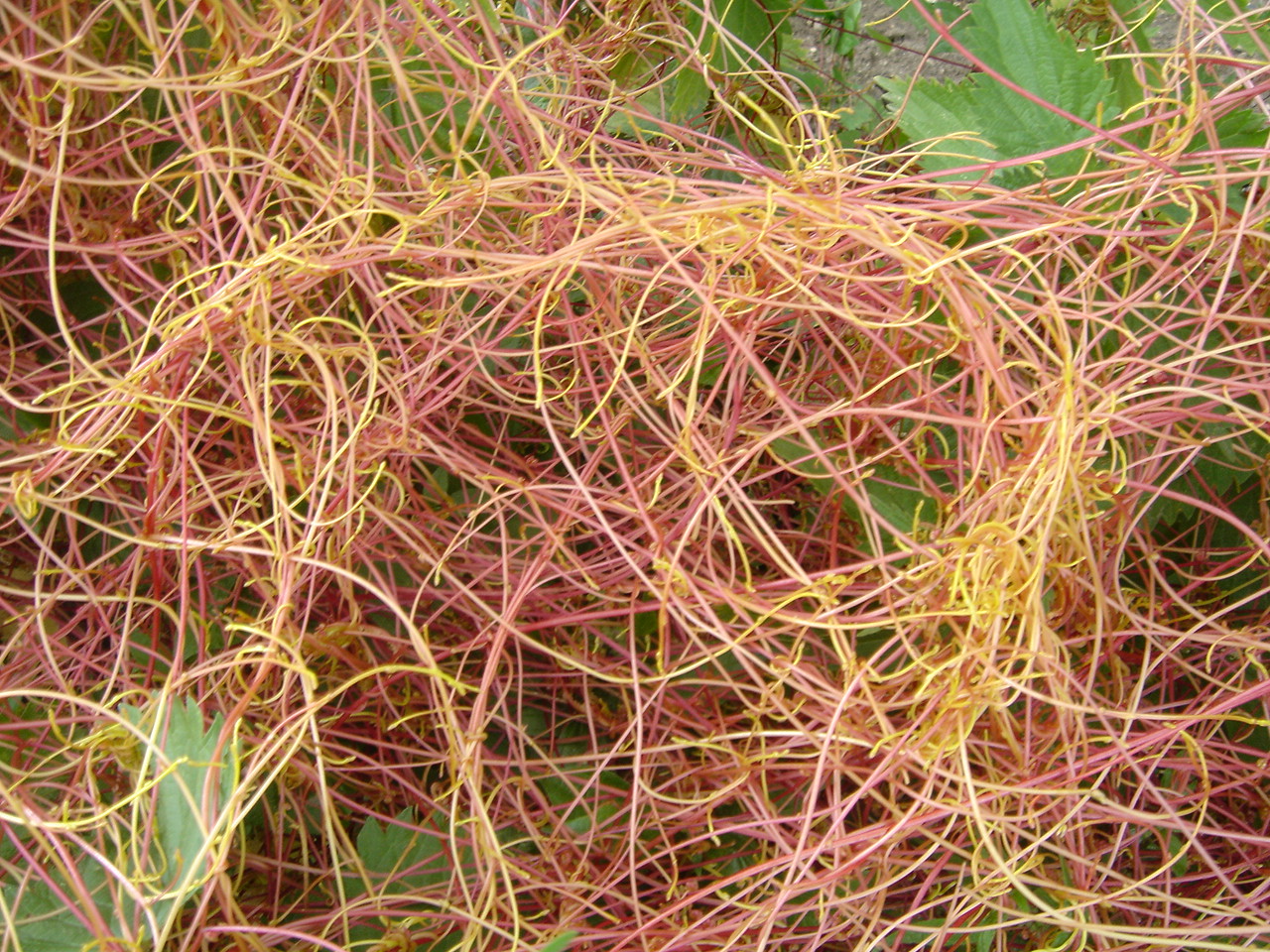
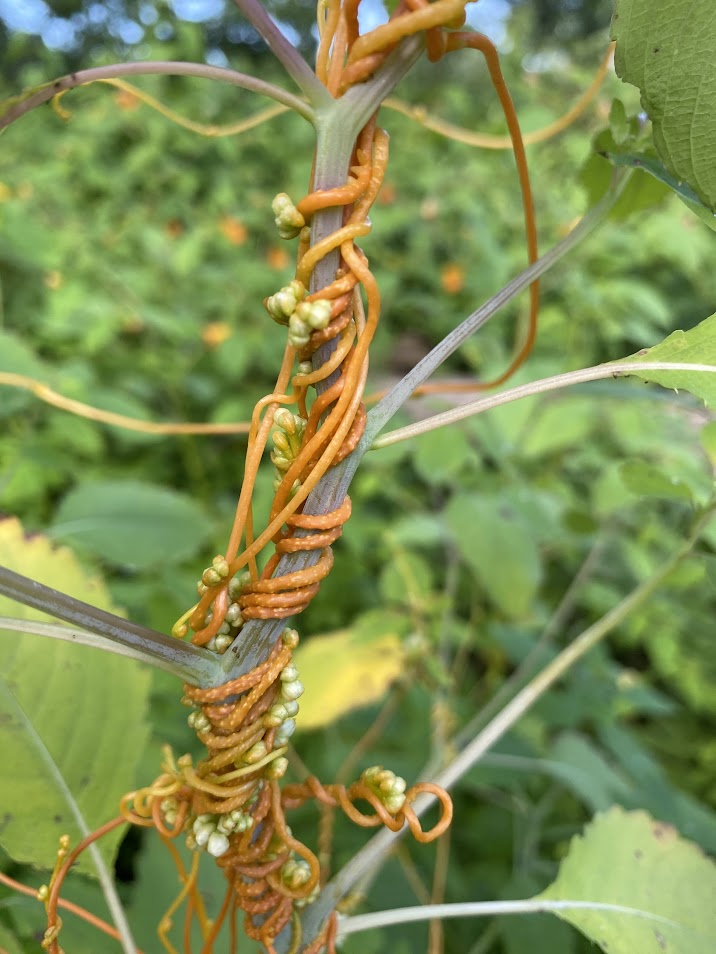
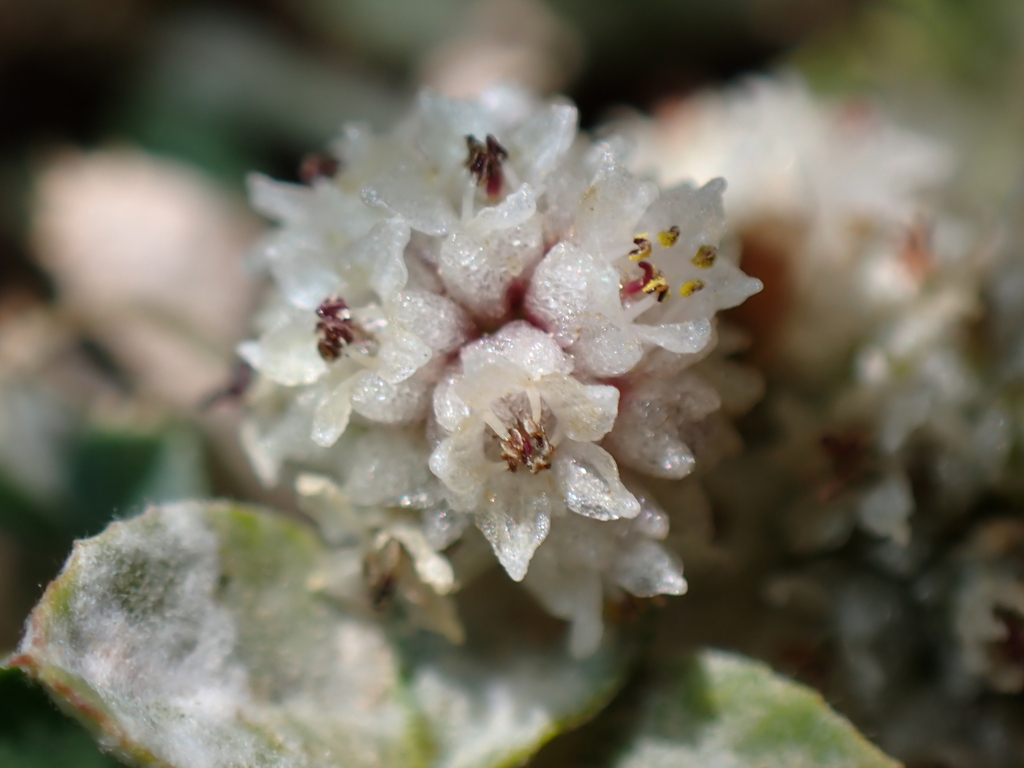
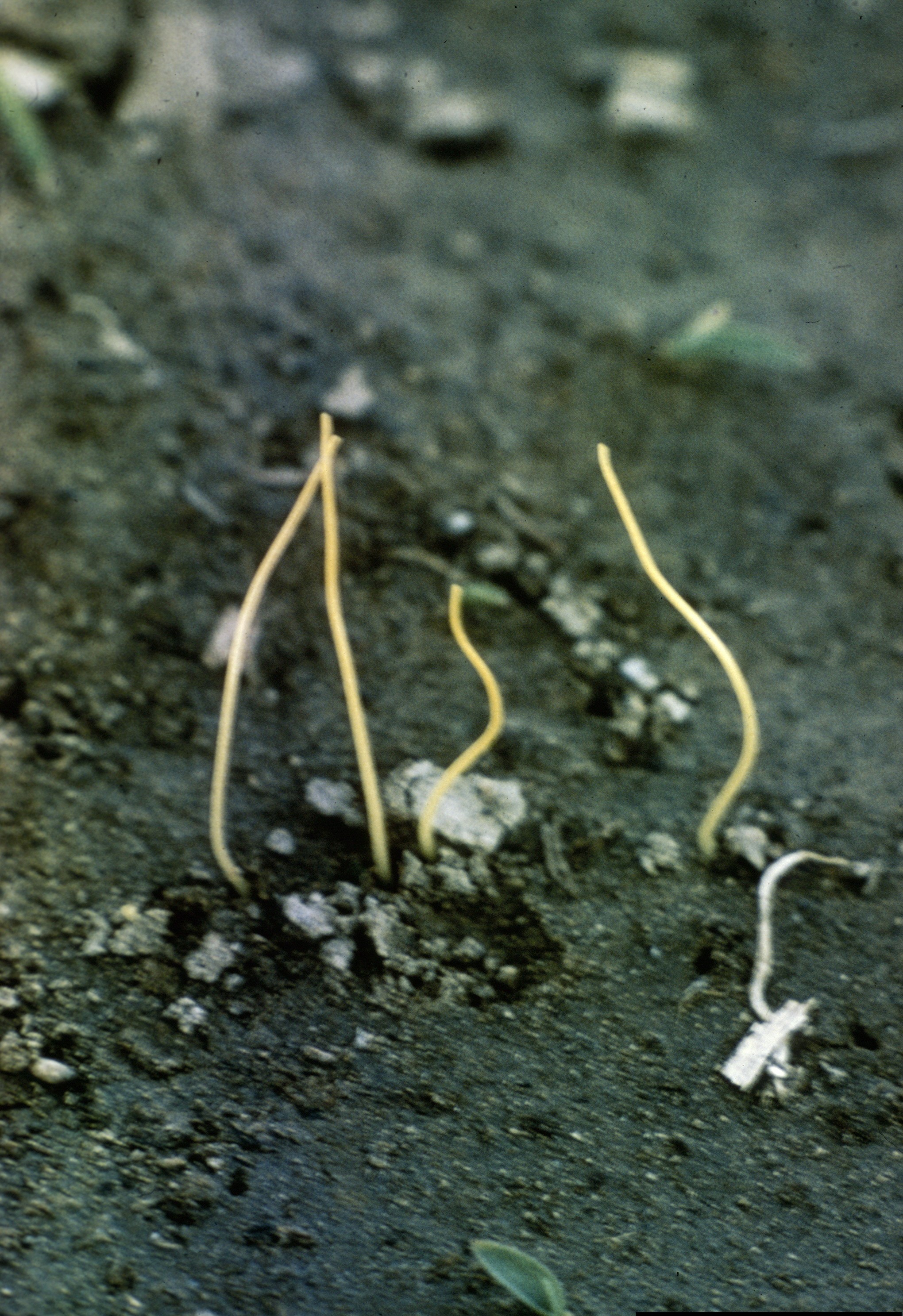

Dodders have slender, spaghetti-like yellowish-orange stems that attach to host plants with many small suckers. Mature plants lack roots. Leaves are tiny, reduced, alternate scales that may not be visible. Flowers are small (less than 4 mm long), bell-shaped and white to pinkish with a waxy texture, often occurring in clusters. Fruits are round capsules containing up to 4 seeds; seeds are small (1 to 2 mm) and difficult to see.
How they spread
Dodders produce many seeds that are difficult to separate from small-seeded crops. They are mainly spread through contaminated seed lots of forage legumes, such as alfalfa and clovers. They may also be spread by vehicles, equipment and livestock or naturally by wind, water or birds.
What you can do
- Use clean, high quality seed that is certified if possible
- Ensure machinery, vehicles and tools are free of soil and plant parts before moving them from one area to another
- Leave natural items in their natural habitats
- If you think you've spotted it in Canada, take a photo and report a dodder sighting to the Canadian Food Inspection Agency. We will follow up and determine if further action is needed.
What we are doing
Non-native dodders are regulated as pests in Canada under the Plant Protection Act. All dodder species are listed as prohibited noxious weeds in the Weed Seeds Order, 2016 under the Seeds Act. Importation and domestic movement of regulated plants and their propagative parts is prohibited.
Please note that following native dodders are exempt from regulation under the Plant Protection Act:
- Cuscuta campestris (field dodder)
- Cuscuta cephalanthi (buttonbush dodder)
- Cuscuta coryli (hazel dodder)
- Cuscuta gronovi (swamp dodder)
- Cuscuta indecora (large alfalfa dodder)
- Cuscuta pacifica (large saltmarsh dodder)
- Cuscuta pentagona (five-angled dodder)
- Cuscuta polygonorum (smartweed dodder)
- Cuscuta umbrosa (large-fruit dodder)
More information
- Weed seed: Dodder
- Invasive plants field guide
- Learn more about invasive species