
On this page
Double-sided pest card (3.5" x 2")
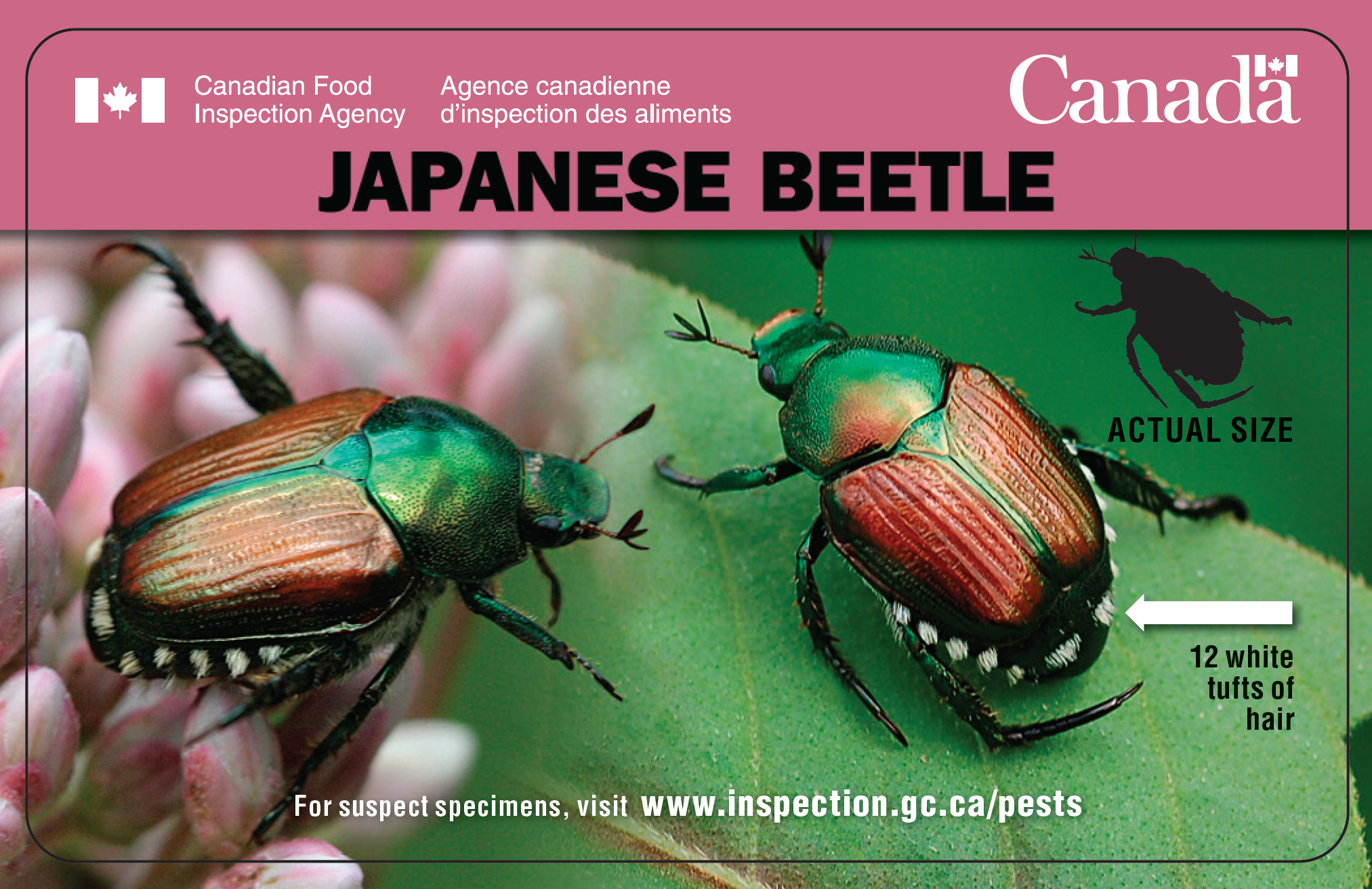
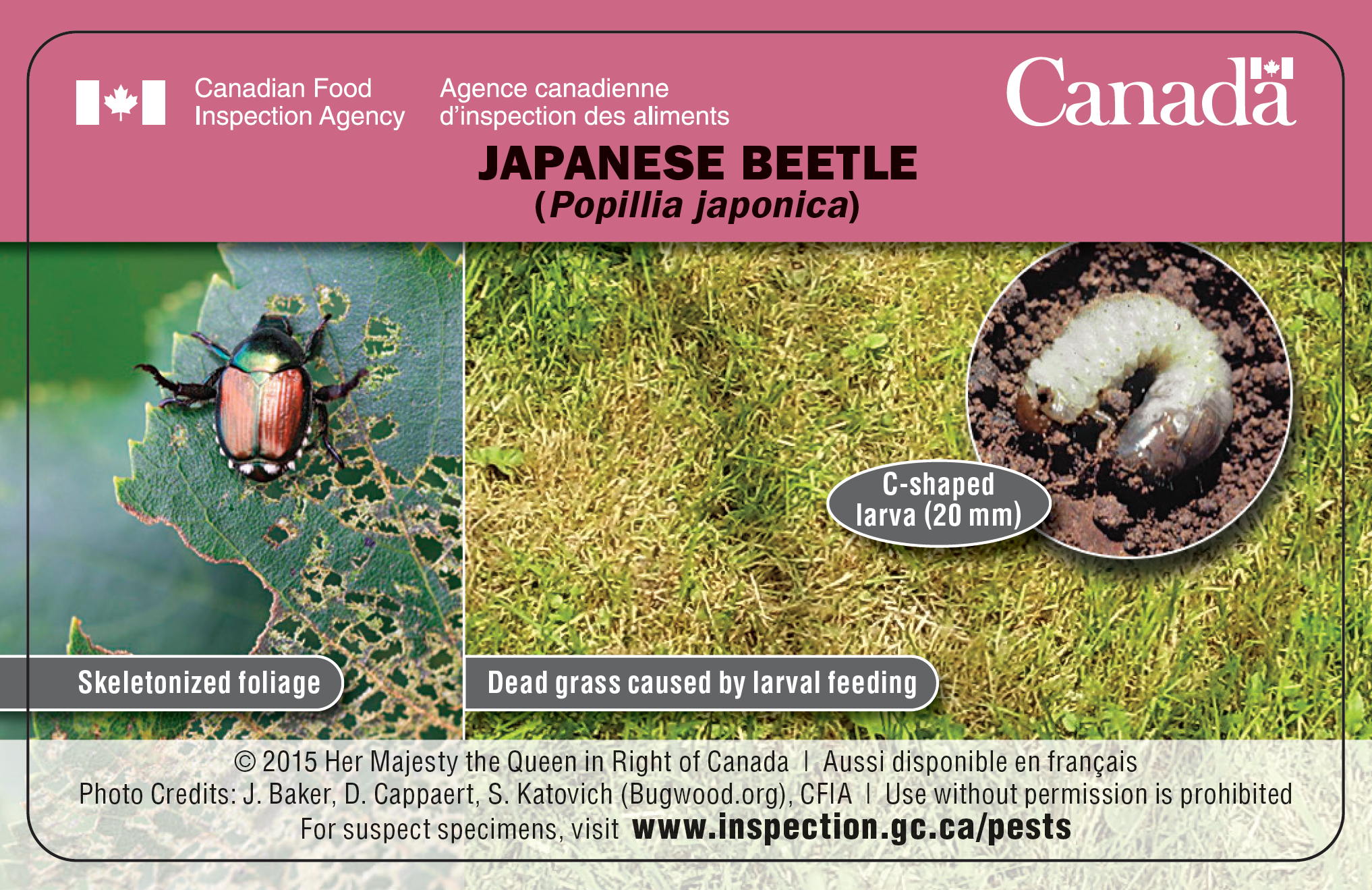
Text version – Japanese beetle plant pest card
Adult: Oval outline from above, almost 10 mm long and 6 mm wide, abdomen, thorax and head metallic green with metallic copper-brown wing coverings and contrasting 12 white tufts of hair along the sides and rear of the abdomen.
Larva: a typical C-shaped creamy white grub with a yellowish-brown head (20 mm).
Signs of Japanese beetle include skeletonized foliage and dead grass caused by larval feeding.
© 2023 His Majesty the King in Right of Canada. Aussi disponible en français. Use without permission is prohibited. Photo credits: J. Baker, D. Cappaert, S. Katovich (Bugwood.org), CFIA. Please report suspect specimens.
Infosheet (8.5" x 11")

Text version – Infosheet: Learn to spot the Japanese beetle
Japanese beetle, Popillia japonica, is an destructive plant pest that was first introduced to eastern North America from Japan in 1916.
Japanese beetle causes damage during two phases of its life cycle; the larval and adult stages. The adults are active flyers, but natural spread is slow and they are not able to travel long distances on their own. These beetles may move long distances as hitchhikers on plant material, in roots or soil, or even on cars, trains or planes. The Canadian Food Inspection Agency (CFIA) is working with its partners to minimize the human assisted spread of this insect to new areas.
What does it look like?
Adult Japanese beetles are oval-shaped and approximately 1 cm long. They are metallic green with two bronze wing covers and six white tufts of hair on each side of the abdomen. The larvae are creamy white C-shaped grubs that are found in the soil.
What does it eat?
Japanese beetle larvae feed on the roots of turf grass and other plants. Adults are heavy feeders, attacking the flowers, foliage and fruit of more than 250 plant species, including roses, blueberries and grapevines.
What are the impacts?
Adult Japanese beetles skeletonize leaves and eat flowers and fruit. They can significantly damage landscape plants, ornamental plants, fruit and vegetable gardens, nurseries, orchards, and agricultural crops. The larvae feed on the roots of turf and other plants and can seriously damage lawns, sports fields, golf courses and turf production.
Where is it now?
Japanese beetle is present throughout most of eastern North America. The CFIA places traps each summer as part of a surveillance network to alert the CFIA of any new introductions of the beetle and assist with provincially-led responses to the beetle in British Columbia and Newfoundland and Labrador.
How can I help?
- Report any insects that you suspect could be Japanese beetle to the CFIA by calling 1-800-442-2342 or send us the details online.
- Do not move or tamper with any of the Japanese beetle traps that you see this summer.
- Avoid moving soil, plants with soil, pruning waste and other plant debris from areas where this insect has been reported.