

Secure housing and fencing help keep your pigs contained and separated from wild pigs, wildlife and other disease risks. Whether your pigs live mainly indoors or outdoors, regularly check their housing, fences and gates and repair problems quickly.
Provide safe housing and shelter
Pig housing should be secure, easy to inspect and suited to the number, size and type of pigs you keep.
Provide your pigs with:
- a clean, dry place to rest and sleep
- protection from rain, wind, extreme heat and cold
- shade during hot weather
- good ventilation
- safe flooring and bedding
- enough room to move around comfortably
- protection from wildlife and predators
- securely closing doors and gates
- housing that is easy to clean and maintain
Check for sharp edges, loose boards, damaged flooring and openings that could injure a pig or allow it to escape.
Outdoor pigs need access to shelter that protects them from adverse weather and provides a dry resting area and shade. Outdoor sites should also be selected with drainage, wind exposure, access to shelter during severe weather and protection from predators in mind.
Use secure fencing
Pigs are strong and may push, lift or root underneath a weak pig fence or gate. Use sturdy fencing and secure gates that keep your pigs inside their designated area.
Regularly look for:
- gaps under or between fencing
- loose wire, boards or posts
- damage caused by rooting
- gates that do not close or latch securely
- erosion, fallen branches or storm damage
- areas where pigs or wildlife have been digging
- snow, soil, manure or other material piled against fencing that could help animals cross over it
Repair damage promptly.
Farms, pigs and local conditions differ. There is no single recommended fence height, wire spacing or electric-fence setting. Pig owners should speak with a fencing specialist, veterinarian or provincial pork organization when choosing or installing a fence.
Prevent contact with wild pigs and other wildlife
Wild pigs can carry diseases like African swine fever (ASF) that could be transmitted to domestic herds. Disease may spread through direct contact or indirectly through contaminated ground, feed, water, equipment or other materials. Wild pigs are established in some parts of Canada and escaped or uncontained pigs may also be reported elsewhere. See the 2025 Canadian Invasive Wild Pig Report and map (PDF) for known locations and provincial reporting information.
To reduce the risk:
- prevent nose-to-nose contact between your pigs and wild pigs
- keep wildlife out of pig pens and shelters
- close and secure gates after every use
- do not allow domestic pigs to roam beyond their fenced area
- look for tracks, rooting, droppings or fence damage
- report wild pig sightings through the appropriate provincial program
Protect feed and water
Wildlife, rodents and birds can contaminate pig feed, bedding and water. The national biosecurity standard recommends maintaining feed and bedding storage and preventing contamination of water systems.
- Store feed in closed, wildlife-resistant containers
- Use covers on outdoor feed hoppers
- Clean up spilled feed promptly
- Keep feeders and waterers inside the secure pig area
- Prevent pigs from drinking from standing or surface water that may be contaminated
- Check feeders, waterers and storage areas for signs of wildlife or pests
- Keep bedding dry and protected during storage
Learn more about feeding pigs safely.
Control access to pig areas
Limit the number of people, animals, vehicles and pieces of equipment entering pig areas.
Use one controlled entry point where possible and:
- keep gates closed and secured
- limit access to people who care for the pigs
- post signs telling visitors to contact you before entering
- keep pets and other livestock out of pig pens
- clean and disinfect footwear or have dedicated boots
- clean equipment before it enters and after it leaves the pig area
- avoid placing pig pens next to public paths, roadways or property boundaries where contact is harder to control
Keep a separate area for new or sick pigs
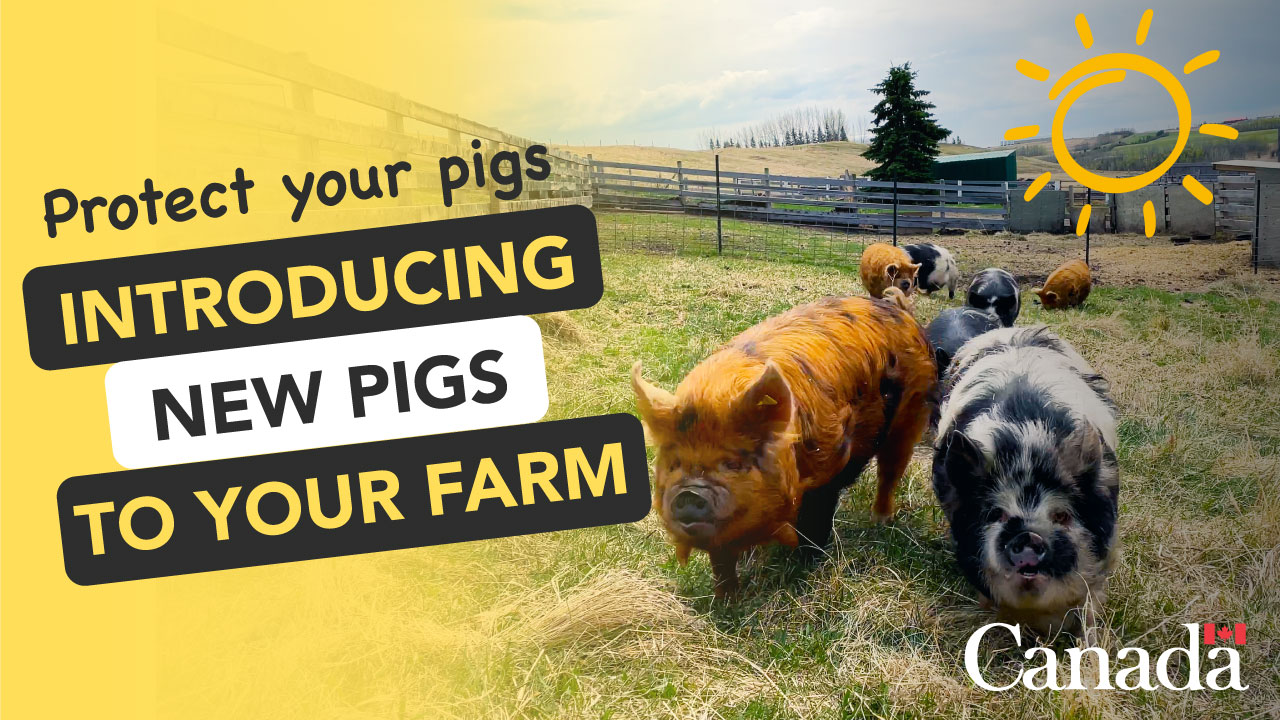
Plan for a separate pen or shelter for newly introduced pigs and pigs that appear sick. Keep new pigs apart from your other pigs while you watch for signs of illness and ask a veterinarian when it is safe to introduce them.
The area should:
- be separated from your other pigs
- prevent nose-to-nose contact
- have its own feeder and waterer
- have dedicated clothing, boots and equipment
- be easy to clean and disinfect
- prevent manure, bedding and drainage from reaching healthy pigs
Do not move equipment from the isolation area into other pig areas unless it has been properly cleaned and disinfected.
Learn more about what to do if your pigs appear to be sick.
Use the biosecurity checklist to identify other ways disease could reach your pigs and strengthen the protection around their housing and outdoor areas.
Get more Inspect and Protect
- Want to learn more about what we do? Explore articles, videos and podcasts.
- Interested in reporting on a story? Contact CFIA Media Relations to arrange an interview with one of our experts.
- Have an idea or feedback to share? Get in touch!