
ISSN: 2563-0261
Every year, we conduct surveys to support plant health in Canada.
Our Plant Health Survey Program supports plant health by detecting new pests and by monitoring the spread of established pest populations, forming the basis for sound regulatory decisions. Surveillance data collected by trapping, visual inspection and sampling efforts contribute to policy development and trade negotiations. Plant health surveillance activities also support Canada in meeting the International Standards for Phytosanitary Measures.
These survey results were collected between April 1, 2025, to March 31, 2026.
This page will be updated to add the survey results for other pests.
Survey results
Forest pests
Emerald ash borer

The emerald ash borer (Agrilus planipennis) was first detected in Canada in Windsor, Ontario, in July 2002. Since the initial detection, this species has been found in:
- parts of Ontario, Quebec, New Brunswick and Nova Scotia
- Manitoba: Winnipeg
- British Columbia: Metro Vancouver Regional District
The primary goal of this survey is to determine whether emerald ash borer is present in areas where it is not known to occur to provide information in support of regulatory decisions.
Method: visual inspection and traps
Two main strategies were used for emerald ash borer detection in Canada:
- visual inspection of ash trees
- trapping using green prism traps baited with attractants
In addition, targeted branch sampling was also used in newly infested areas in the Metro Vancouver Regional District. This method increases our ability to detect newly infested trees that do not show signs or symptoms of infestation.
Target sites for this survey include areas showing broad-scale ash decline and high-risk sites where the pest is most likely to have been introduced through human activities, such as:
- campgrounds
- firewood dealers
- rest stops along major transportation corridors
- urban areas recently planted with host material
- sawmills
- holiday destinations
Traps were also deployed within select urban centers using a grid-based approach.
Results from 415 sites surveyed
| Provinces | Number of sites surveyed | Results |
|---|---|---|
| British Columbia | 30 | One detection in Surrey was made by the City of Surrey and confirmed by the CFIA. |
| Alberta | 56 | No detections |
| Saskatchewan | 21 | No detections |
| Manitoba | 59 | No detections outside the regulated area. |
| Ontario | 80 | No detections outside the regulated area. |
| Quebec | 18 | Detections in Bonaventure (Gaspésie), La Tuque, Clermont and La Malbaie. |
| New Brunswick | 33 | No detections |
| Nova Scotia | 91 | Detections in Hants County (Mill Section, East Hants, West Hants) and Cumberland County (Amherst Shore Provincial Park). |
| Prince Edward Island | 18 | No detections |
| Newfoundland and Labrador | 9 | No detections |
| Canada | 415 |
Collaborators and community scientists surveyed an additional 179 sites. Regulated areas have been updated to reflect the new detections and additional monitoring in 2026 will continue to inform regulatory decisions and control measures. |
Map of results

The map shows the locations of 415 sites that were surveyed for emerald ash borer in 2025 in all Canadian provinces.
There are 8 positive sites in:
- British Columbia: the city of Surrey
- Quebec: La Malbaie, Bonaventure, Clermont and La Tuque
- Nova Scotia: Hants and Cumberland County
The map also shows the regulated areas for this pest which cover:
- in British Columbia: the cities of Vancouver, Burnaby, New Westminster and Surrey
- in Manitoba: city of Winnipeg
- the southern part of Ontario
- the southern part of Quebec
- the southwestern part of New Brunswick
- in Nova Scotia: the Halifax Regional Municipality
Hemlock woolly adelgid

The hemlock woolly adelgid (Adelges tsugae) is a destructive pest of susceptible species of hemlock (Tsuga spp.). Native to eastern Asia and western North America including British Columbia where it was first reported in 1919. The pest was first detected in the eastern United States in 1951. Since then, it has steadily spread and is now reported from 21 eastern states. In the eastern U.S., it has resulted in significant mortality of both eastern hemlock, (T. canadensis) and Carolina hemlock, (T. caroliniana) and threatens the existence of these 2 species in many locations.
In Canada it has been detected in:
- western Nova Scotia
- southern Ontario
Method: visual inspection
This survey was conducted between November and June to visually assess hemlock trees for signs and symptoms of attack. Given that the pest is most likely to spread through natural dispersal (wind, birds and small mammals) and through infested nursery stock, target sites included:
- nurseries importing hemlock
- urban parks and greenspaces
- hemlock forest stands within 100 km of the U.S. border
- infested counties in Canada
- hemlock forest stands along migratory bird routes
Results from 201 sites surveyed
| Provinces | Number of sites surveyed | Results |
|---|---|---|
| Ontario | 78 | Detections in Scarborough (2 sites) and Norfolk County (6 sites) |
| Quebec | 33 | No detections |
| New Brunswick | 32 | No detections |
| Nova Scotia | 41 | Detections in Bedford and Halifax |
| Prince Edward Island | 17 | No detections |
| Canada | 201 | Monitoring will continue in 2026 to support regulatory decisions and future updates to the Ministerial Order. Until that time, all positive properties are managed at the site level through Notices of Prohibition of Movement. |
Map of results

The map shows the locations of 201 site that have been surveyed for hemlock woolly adelgid in 2025 in the provinces of:
- Ontario (mostly in southern Ontario, around Lake Ontario, outside the regulated areas)
- Quebec (mostly located on the southern shore of the St Lawrence River, from Montreal to Quebec City)
- New Brunswick (in the southern half of the province)
- Nova Scotia (mostly located in the eastern half of the province, outside the regulated areas)
- Prince Edward Island (sites cover most of the province)
There are 10 positive sites located in:
- Ontario: Scarborough (2 sites) and Norfolk County (6 sites)
- Nova Scotia: Bedford and Halifax
The map also shows the regulated areas for this pest which cover:
- the entire province of British Columbia
- in Ontario: the Niagara peninsula and the township of Alnwick / Haldimand
- the southwestern half of Nova Scotia
Brown spruce longhorn beetle

The brown spruce longhorn beetle (Tetropium fuscum) an introduced wood boring pest, is native to north and central Europe and Japan, where it uses stressed and dying conifers as hosts, most notably Norway spruce (Picea abies). All species of spruce in Canada are at risk. In 1999, the beetle was detected in Point Pleasant Park, Halifax, Nova Scotia and confirmed to have been present since at least 1990. In 2025, it was detected again in Quebec, in the Beauce-Sartigan regional county municipality. The brown spruce longhorn beetle is considered to be a pest of quarantine significance in Canada and is regulated under the Plant Protection Act by the CFIA. The entire province of Nova Scotia is regulated for this pest.
Method: traps
Panel traps baited with pheromones are used for this survey. Trapping is conducted at 2 types of sites:
- priority sites such as sawmills, pulp mills campgrounds and ports
- general forested areas
This survey is performed in Eastern provinces to prevent further spread from the known infested areas.
Results from 429 sites surveyed
| Provinces | Number of sites surveyed | Results |
|---|---|---|
| Quebec | 165 |
The beetle was detected again at 2 sites in the Beauce-Sartigan regional county municipality The beetle was also intercepted at 1 site (1 beetle in 1 trap) in the Arthabaska regional county municipality Collaborators surveyed an additional 33 sites. |
| New Brunswick | 224 | No detections |
| Prince Edward Island | 26 | No detections |
| Newfoundland and Labrador | 14 | No detections |
| Canada | 429 | Additional monitoring in 2026 will continue to inform regulatory decisions and control measures. |
Map of results

The map shows the locations of 429 sites that have been surveyed for Brown spruce longhorn beetle in 2025, covering the provinces of:
- Quebec (sites are mostly located on the south shore of the St. Lawrence River from the Montréal area all the way to Gaspesie)
- New Brunswick (sites cover the entire province but most are located in the southern half of the province)
- Newfoundland and Labrador (sites are scattered across the province)
- Prince Edward Island (sites cover the whole province)
The map also shows the location of 3 positive sites in Quebec: 2 sites in the regional county municipality (RCM) of Beauce-Sartigan and 1 interception in the RCM of Arthabaska.
The regulated area for this pest covers the entire province of Nova Scotia.
Asian longhorned beetle

The Asian longhorned beetle (Anoplophora glabripennis) is an invasive insect that attacks and kills a wide variety of deciduous tree species. This beetle was detected for the first time in Canada in September 2003. An eradication program was implemented and in 2020, the pest was declared eradicated from Canada based on 5 years of negative survey data and in accordance with international phytosanitary standards. Given the constant threat this pest poses to Canada, ongoing national surveillance activities are designed to ensure a high probability of detection in high-risk areas.
Method: visual inspection
This survey is conducted through visual inspection looking for symptoms and signs of attack by this beetle on host trees:
- maple
- willow
- poplar
- birch
- elm
The survey is carried out between September and March when leaves are absent and the bark of branches located in the canopy is visible. An area-wide grid-based approach is implemented in high-risk areas and includes a variety of landscapes:
- residential areas
- commercial areas
- industrial areas
- transportation/utility corridors
- forested land and green spaces
Results from 1,739 sites surveyed
| Provinces | Number of sites surveyed | Results |
|---|---|---|
| British Columbia | 465 | No detections |
| Alberta | 110 | No detections |
| Saskatchewan | 10 | No detections |
| Manitoba | 40 | No detections |
| Ontario | 729 | No detections |
| Quebec | 273 | No detections |
| New Brunswick | 26 | No detections |
| Nova Scotia | 45 | No detections |
| Prince Edward Island | 24 | No detections |
| Newfoundland and Labrador | 17 | No detections |
| Canada | 1,739 | Canada is considered free from the Asian longhorned beetle. |
Map of results

The map shows the locations of 1,739 sites that have been surveyed in Canada for the Asian longhorned beetle in 2025 covering all provinces:
- British Columbia and Alberta (sites are in the southern half of the province)
- Saskatchewan (sites are located around Regina and Saskatoon)
- Manitoba (most sites are located around Winnipeg and Brandon)
- Ontario and Quebec (sites are located in the southern part of the provinces)
- Atlantic provinces (sites are scattered across the provinces)
Oak wilt
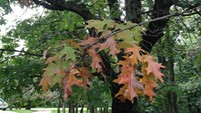
Oak wilt (Bretziella fagacearum) is a vascular wilt disease that is capable of killing trees in a single season. It was first recognized as an important forest pest in 1944 in Wisconsin and is now known to occur in 24 states within the U.S. In 2023 oak wilt was detected for the first time in Canada, at 3 locations in Ontario. An active management plan was implemented to support eradication of the disease at these locations. Oak wilt is spread from diseased to healthy trees through:
- root grafting
- oak bark beetles
- sap beetles
All oak species are susceptible to oak wilt, but red oaks are more frequently infected and can die quite quickly. The primary goal of this survey is the early detection of the pest in areas where it is not known to occur.
Method: visual inspection
This survey consists of a visual inspection of host trees for signs and symptoms of oak wilt. Surveys focus on areas where oak wilt could have been introduced through human-assisted movement of infected commodities from infested areas. An emphasis is placed on:
- campgrounds where oak firewood may be transported from infected areas
- mills or other facilities importing oak logs
- disposal sites
- areas where recent weather events may have damaged limbs/trees
Results from 129 surveyed sites
| Provinces | Number of sites surveyed | Results |
|---|---|---|
| Manitoba | 5 | No detections |
| Ontario | 57 | No new detections |
| Quebec | 47 | No detections |
| New Brunswick | 8 | No detections |
| Nova Scotia | 10 | No detections |
| Prince Edward Island | 2 | No detections |
| Canada | 129 |
Oak wilt was not detected in 2025. We assessed more than 104 public reports for oak wilt and followed up with site visits when appropriate. Delimitation surveys were completed around the 3 sites where the pathogen was detected in 2023 in Ontario. Oak wilt was not detected. |
Map of results
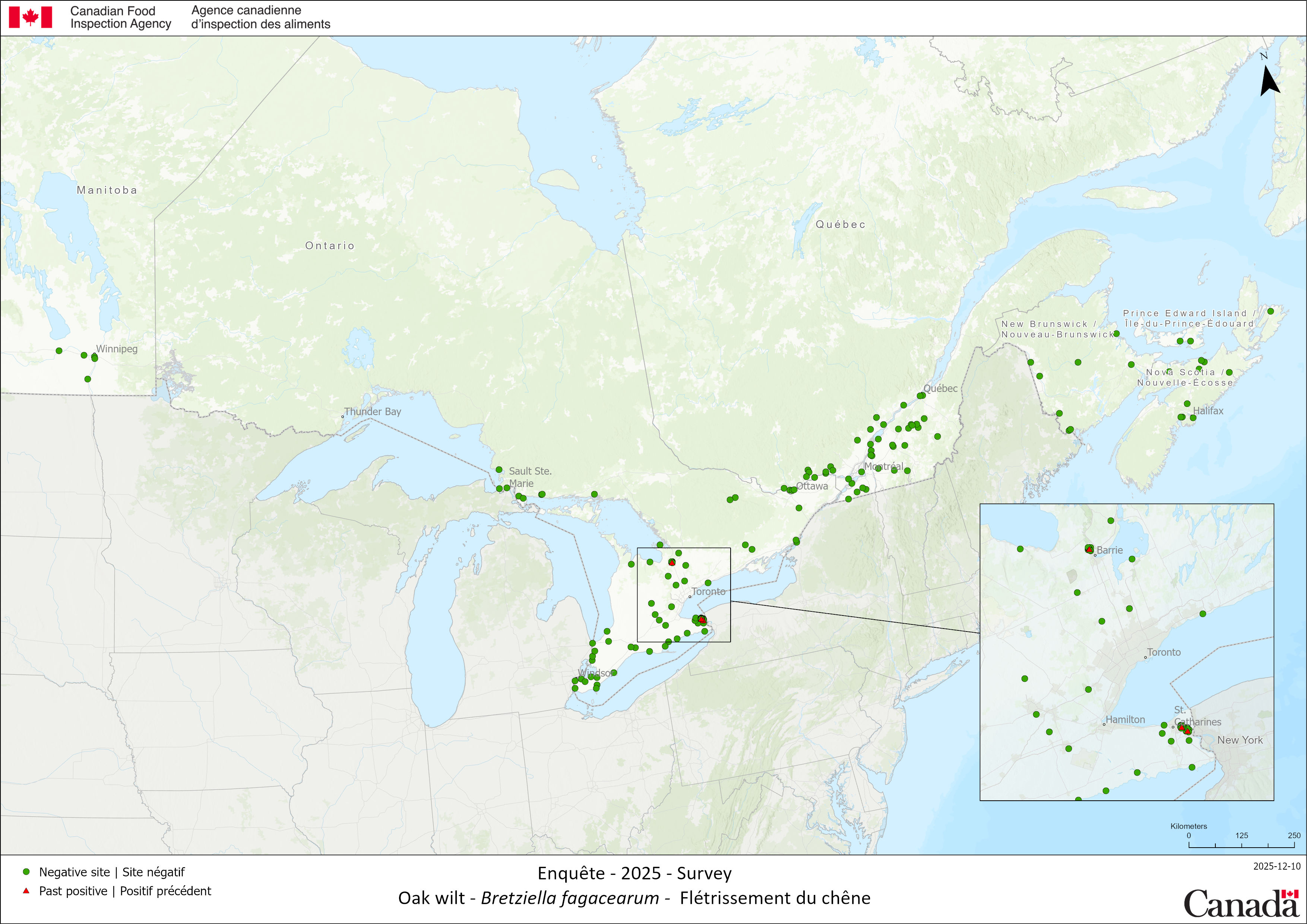
The map shows the locations of 129 sites that were surveyed for oak wilt in 2025 in the provinces of:
- Manitoba (sites are located in the southeast corner of the province, around the Winnipeg area)
- Ontario (sites are mostly located in Southern Ontario, with some in Eastern Ontario and a small cluster of sites around Sault Ste-Marie)
- Quebec (sites are mostly located between Gatineau and Montreal and all along the St. Lawrence Lowlands, up to Quebec City)
- New Brunswick (sites are scattered across the southern half of the province)
- Nova Scotia (sites are mostly located on the northern part of the province)
- Prince Edward Island (sites are located in the eastern half of the province)
The map also shows the 3 positive sites from 2023 in the municipalities of:
- Niagara Falls
- Niagara-on-the-Lake
- township of Springwater
Red pine scale
The red pine scale (Matsucoccus matsumurae) is a destructive pest of susceptible species of pine that is native to Japan and introduced into China, South Korea, Europe and United States.
It was first reported in North America in 1949 in Connecticut, but has since spread to Maine, Massachusetts, New Hampshire, New Jersey, New York, Pennsylvania and Rhode Island.
Red pine scale kills red pine (Pinus resinosa) trees of all ages within a few years of infestation.
Method: visual inspection
This is a visual survey aimed at early detection of the pest in areas of Canada at risk to introduction. Trees are visually inspected for symptoms and signs of the pest:
- yellow and red foliage
- decline
- bark beetle attack
- cottony white filaments on branches
The optimal period for this survey is from September through October. However, surveys can occur year-round. This survey targets forest stands at risk in urban areas, near importers of pine forest products and nursery stock, and in pine stands located within 100 km of the Canada and U.S. border.
Results from 20 surveyed sites
| Provinces | Number of sites surveyed | Results |
|---|---|---|
| Quebec | 10 | No detections |
| New Brunswick | 5 | No detections |
| Nova Scotia | 5 | No detections |
| Canada | 20 |
Red pine scale has never been detected in Canada. |
Map of results

The map shows the 20 locations of sites that have been surveyed for the red pine scale in 2025 in:
- Quebec (sites are located mostly close to the U.S.-Canada border and on the south shore of the St Lawrence River, close to Quebec City)
- New Brunswick (most sites are located close to the border between Maine and New Brunswick)
- Nova Scotia (sites are located in Colchester and Hants counties)
Horticulture pests
Ramorum blight
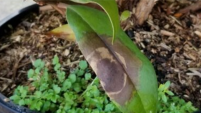
Ramorum blight (Phytophthora ramorum) is a plant pathogen that causes a disease known as ramorum blight on a wide variety of nursery plants. It has also been associated with a disease of oak, known as "Sudden Oak Death", that was first observed in coastal California in the mid-1990's. Since 2003, ramorum blight has been detected in a number of retail/wholesale nurseries in the southern coastal area of British Columbia. The primary goal of this survey is to provide information on the national status of this disease in Canadian nurseries. Additional surveys are conducted to support eradication activities following a new detection. Sites with detections are also surveyed for 2 years following an eradication in order to confirm the success of the eradication.
Method: visual inspection
The focus of this survey is to visually inspect high-risk host plants at target facilities and to collect samples with symptoms consistent with expression of ramorum blight infection. The survey targets nurseries that propagate the host plants listed in D-01-01: Phytosanitary requirements to prevent the entry and spread of Phytophthora ramorum and nurseries that grow ramorum blight host plants beyond the year of import or propagation, including wholesale nurseries.
Results from 23 surveyed sites
| Provinces | Number of sites surveyed | Results |
|---|---|---|
| British Columbia | 11 | Detection at 1 nursery on Vancouver Island. |
| Ontario | 10 | No detections |
| Quebec | 2 | No detections |
| Canada | 23 | Regulatory measures have been implemented at the infested nursery and an eradication protocol was initiated. |
Map of results
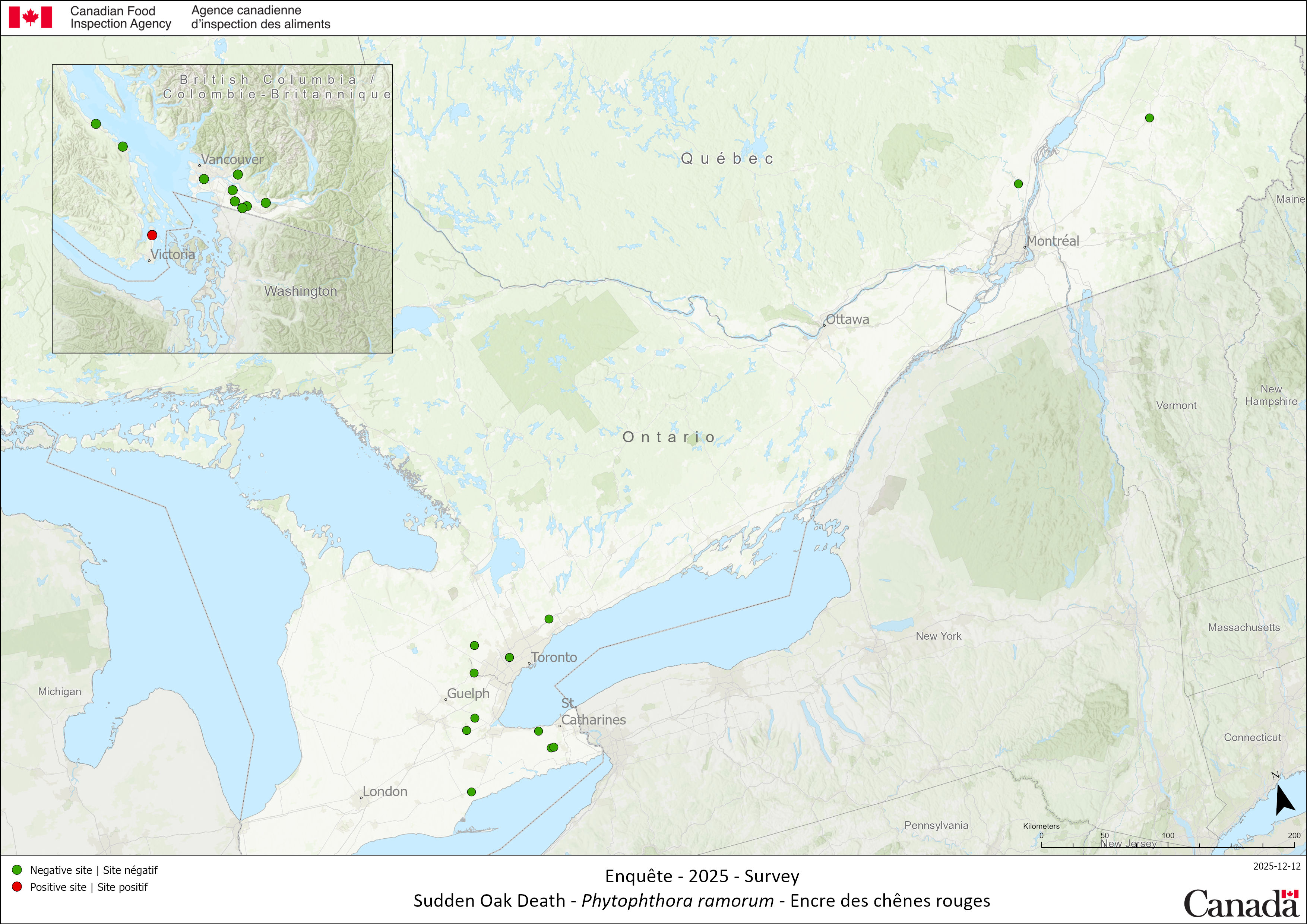
The map shows the locations of 23 sites that have been surveyed for ramorum blight in 2025 in the provinces of:
- British Columbia (sites are located on the island of Vancouver and in the Lower Mainland)
- Ontario (sites are located in the Niagara peninsula, close to Simcoe, Hamilton and in the greater Toronto area)
- Quebec (sites are located close to Joliette and close to Victoriaville)
The map also shows one positive site located on Vancouver Island, BC.
Plum pox virus

Plum pox virus (Potyvirus plumpoxi) is a serious plant disease that affects many stone fruit species within the genus Prunus, including:
- peaches
- nectarines
- plums
- apricots
- almonds
- some ornamental varieties
Although it does not kill trees, it:
- reduces the marketability of the fruit
- causes early fruit drop in infected trees
- drastically reduces fruit yields
Plum pox virus is present in parts of the Niagara Region and the City of Hamilton, Ontario, where a regulated area has been established. This survey is being conducted in support of policies and programs related to D-99-07: Policy for importation from the United States and domestic movement of plum pox virus susceptible Prunus propagative plant material.
Method: leaf sampling
Leaf sampling surveys take place at select orchard and residential properties to ensure continued monitoring along the boundary of the plum pox virus regulated area. Depending on the location and site type, these activities are performed on a rotational basis, taking place every 1 to 3 years.
Results from 148 sites surveyed
| Provinces | Number of sites surveyed | Results |
|---|---|---|
| Ontario | 148 |
22 orchards and 126 residential properties were visited and sampled. Plum pox virus was not detected. |
Blueberry maggot
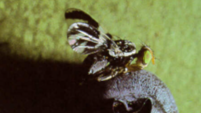
The blueberry maggot (Rhagoletis mendax) is an indigenous pest of commercially grown lowbush and highbush blueberries in the Canadian Maritime Provinces. It is currently found in:
- Nova Scotia
- New Brunswick
- Prince Edward Island
- parts of Ontario
- parts of Quebec
It is not found in Newfoundland and Labrador or in western Canada.
Method: traps
This survey uses baited traps which are attractive to male and female blueberry maggot adult flies. Multiple traps are placed within blueberry plantations and wild sites containing host species in areas not regulated for blueberry maggot. Traps are installed prior to the pest's flight period in late June and collected at the end of harvest or fruit drop, in late August or early September.
Results from 55 sites surveyed
| Provinces | Number of sites surveyed | Results |
|---|---|---|
| British Columbia | 18 | No detections |
| Ontario | 14 | No new detections outside the known infested areas. |
| Quebec | 4 | No new detections outside the known infested areas. |
| Newfoundland and Labrador | 19 | No detections |
| Canada | 55 | Regulated areas remain unchanged. |
Map of results
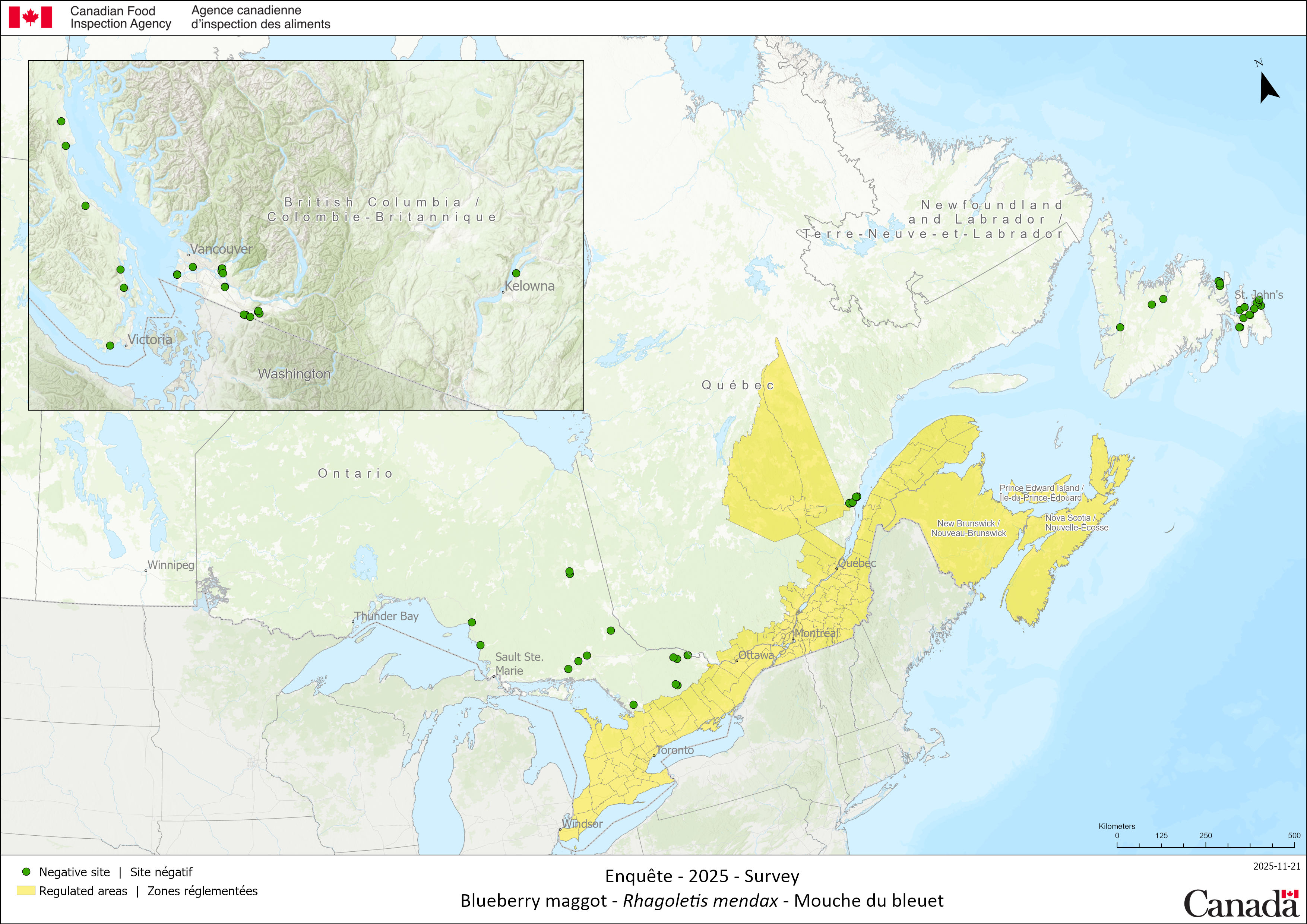
The map shows 55 sites that have been surveyed for blueberry maggot in Canada in 2025, in the provinces of:
- British Columbia (sites are mainly located in the Lower Mainland and on the southeastern coast of Vancouver Island)
- Ontario (sites are located in Northeastern Ontario)
- Quebec (sites are located close to Tadoussac)
- Newfoundland and Labrador (sites are mostly located on the Avalon peninsula and a few sites are scattered across the rest of the province)
The regulated areas for the blueberry maggot are also shown and cover the entire provinces of:
- New Brunswick
- Nova Scotia
- Prince Edward Island
and parts of
- Ontario (southern Ontario)
- Quebec (St. Lawrence lowlands, Gaspesie and a large area surrounding Lac-St-Jean)
Apple maggot
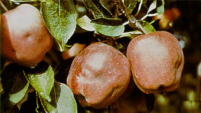
Apple maggot (Rhagoletis pomonella) is an indigenous pest of apples in Canada. The BC Interior is the last major apple growing area of North America free from this pest. The objective of this survey is the early detection of apple maggot to maintain the pest-free area of the BC Interior. This survey is being conducted in support of policies and programs related to CFIA policy directive D-00-07: Phytosanitary requirements to prevent the introduction and spread of apple maggot. In 2015, a single female apple maggot was detected in West Kelowna and in 2016 another single female was detected in the city of Kelowna. Despite increased surveillance from 2016 to 2019 apple maggot has not been detected since 2016.
Method: traps
This survey is conducted using sticky red spheres baited with an attractant and placed in host plants between June and September, when adult apple maggot flies are active. Traps are deployed to give an optimal coverage of known pome fruit production areas and associated urban and rural properties with suitable hosts, as well as riparian areas. The survey also includes selected sites that are perceived to be high risk for introduction of the pest.
Results from 221 surveyed sites
| Provinces | Number of sites surveyed | Results |
|---|---|---|
| British Columbia | 221 |
No new detections in the pest free area and outside the known infested areas. The pest free area in the interior of British Columbia is considered free from apple maggot. |
Map of results
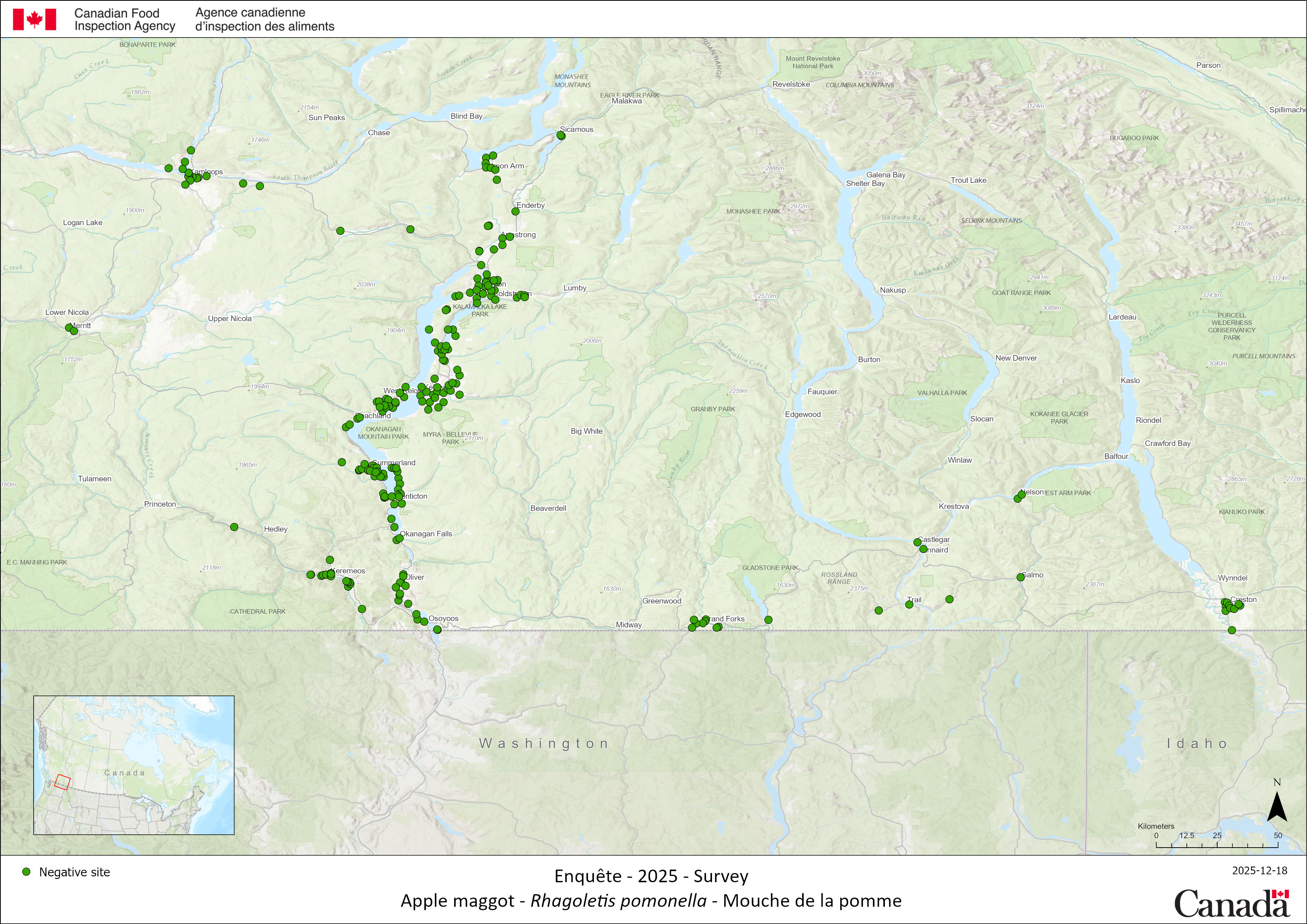
The map shows 221 sites that have been surveyed for apple maggot in British Columbia, Canada, in 2025. The sites are mostly located in the Okanagan valley, around Kamloops and in the Kootenay-Boundary region, in proximity to the U.S.-Canada border.
Japanese beetle

The Japanese beetle (Popillia japonica) has been present in Canada since its first detection in Yarmouth, Nova Scotia, in 1939. This pest affects more than 300 plant species, including many economically important plants such as:
- fruit trees
- ornamental shrubs and roses
- field crops
- turf grasses and sod
In 2017, Japanese beetle was detected in Vancouver, British Columbia and a multi-collaborator eradication program has been ongoing since 2018. In 2025, a total of 2,226 beetles were caught in British Columbia, most of them in Kamloops and Port Coquitlam.
Japanese beetle was detected again in 2025 the City of St. John's, Newfoundland and Labrador. An eradication program was launched by provincial and municipal collaborators to attempt eradication of the beetle from St. John's and prevent further spread in Newfoundland and Labrador.
Method: traps
This survey is conducted using pheromone traps which were installed in May and remained in the field until October. The traps contain a Japanese beetle attractant which is a combination of a floral lure and a pheromone. In the greater Vancouver area, where eradication is in progress, traps are deployed at various densities, with infested municipalities having the highest density of traps. Survey data is then used to inform treatment activities.
For other locations in Canada, traps are placed adjacent to or near importers of sod, soil or nursery stock from Japanese beetle infested areas and include sites such as nurseries, sod farms, golf courses, cemeteries, public parks and gardens, food terminals, truck and rail compounds/terminals, airports and border points.
Results from 3,668 sites surveyed
| Provinces | Number of sites surveyed | Results |
|---|---|---|
| British Columbia | 3,544 |
A total of 2,226 beetles were detected at 130 sites. Vancouver: 3 beetles detected at 3 sites. Collaborators in British Columbia helped with the monitoring of 1,409 sites. |
| Alberta | 10 | No detections |
| Newfoundland and Labrador | 114 |
St John's: 94 beetles were detected at 26 sites. Collaborators monitored an additional 26 sites. |
| Canada | 3,668 | We continue to support our collaborators in their effort to eradicate the pest from British Columbia and from Newfoundland and Labrador. |
Map of results

The map shows the locations of 3,668 sites that have been surveyed for Japanese beetle in 2025 in:
- British Columbia (most sites are located on the eastern shore of Vancouver Island, in the Lower Mainland, Okanagan valley and Kamloops)
- Alberta (sites are located in Brook, Lethbridge and Medicine Hat)
- Newfoundland and Labrador (sites are distributed across the island of Newfoundland but with most located in the St. John's area)
The map also shows the location of 156 positive sites where the pest was detected in:
- British Columbia (in Kamloops, Abbotsford, Coquitlam, Port Coquitlam, Vancouver and Burnaby)
- Newfoundland and Labrador (in St. John's).
Tobacco blue mold
Tobacco blue mold (Peronospora hyoscyami f. sp. tabacina) is a serious disease of solanaceous plants including:
- tobacco
- peppers
- tomato
- eggplant
It was reported for the first time in North America in 1921, in the States of Florida and Georgia. In Canada it was first reported in Ontario in 1938. This disease has never been reported from British Columbia. Survey activities for this pest are conducted to confirm British Columbia's pest-free status for the exportation of peppers.
Method: visual inspection
This survey was conducted in cooperation with Agriculture and Agri-Food Canada. Visual surveys were conducted on indicator plants (Tobacco blue mold-sensitive tobacco plants, Nicotiana tabacum) at three sites in southwestern British Columbia.
Results from 3 surveyed sites
| Provinces | Number of sites surveyed | Results |
|---|---|---|
| British Columbia | 3 |
No detections There are no changes to the status of tobacco blue mold in Canada. |
Box tree moth

The CFIA has been leading monitoring efforts for box tree moth (Cydalima perspectalis) working with community scientists and collaborators to deploy traps. Volunteers with boxwood in key areas were recruited via social media and collaborator networks. The 2025 monitoring program focused on gathering data to support British Columbia's pest-free status for box tree moth. Traps were distributed to volunteer community scientists in support of this objective.
Method: Visual inspection and traps
Monitoring kits were comprised of traps with sticky liners, lures, pest detection cards and instructions on how to complete data entry using an online community science platform.
Trapping was conducted between May and late September when adults are actively flying. "Milk carton" traps with trap openings enlarged to enhance trap captures and optimize detection efficacy were used to ensure easy shipping and disposal. Traps were checked weekly for the presence of moths and pheromone lures were changed once in August. Data entry was completed weekly and no suspect moth findings were reported.
Results from 113 sites surveyed
| Provinces | Number of sites surveyed | Results |
|---|---|---|
| British Columbia | 113 |
No detections. 25 sites were surveyed by community scientists. In addition, 88 traps were set by collaborators in 18 municipalities. |
Map of results

The map shows the sites monitored for box tree moth in 2025 in Canada: 25 sites have been surveyed by community scientists and 18 municipalities (88 traps) were surveyed by collaborators. The sites are all located on the island of Vancouver and in the Lower Mainland of British Columbia.
The map also shows the regulated areas for this pest which cover the entire provinces of:
- Ontario
- Quebec
- New Brunswick
- Nova Scotia
- Prince Edward Island
- Newfoundland and Labrador
Potato pests
Potato wart

Potato wart disease, also known as potato canker, is caused by Synchytrium endobioticum, a soil-borne fungus. Potato (Solanum tuberosum) is the only cultivated host. The fungus attacks the growing points on the potato plant, such as:
- eyes
- buds and
- stolon tips
The fungus can remain dormant in the soil for more than 40 years as resting spores. In Canada, potato wart is present in Prince Edward Island (PEI) and in Newfoundland and Labrador. The purpose of this survey is to monitor for the presence of Synchytrium endobioticum outside of Newfoundland and Labrador and restricted fields in PEI. This survey is in addition to any sampling and analysis associated with potato wart restricted fields in PEI.
Method: visual inspection and soil sampling
Two main strategies were used for potato wart detection in Canada:
- visual inspection of tubers
- soil sampling and analysis
Suspect tubers and soil samples are sent to our laboratory for analysis. The survey is conducted by sampling soil from seed potato fields in areas where potato wart is not known to occur. Soil is collected using a regular grid pattern, known as grid soil sampling or collected from underneath equipment as it falls from tubers as potatoes move into storage, known as tare soil sampling. Each soil sample collected represents approximately 1 acre of potato production.
Results from 2,212 samples collected
| Provinces | Number of samples collected | Results |
|---|---|---|
| British Columbia | 13 | No detection. Collected from seed production fields using grid soil sampling. |
| Alberta | 241 | No detection. Collected from seed production fields using grid soil sampling. |
| Saskatchewan | 59 | No detection. Collected from seed production fields using grid soil sampling. |
| Manitoba | 178 | No detection. Collected from seed production fields using grid soil sampling. |
| Ontario | 238 | No detection. Collected from seed production fields using grid soil sampling. |
| Quebec | 148 | No detection. Collected from seed production fields using grid soil sampling. |
| New Brunswick | 513 | No detection. Collected from seed production fields using grid soil sampling. |
| Nova Scotia | 37 | No detection. Collected from seed production fields using grid soil sampling. |
| Prince Edward Island | 785 | One field was detected through tare soil samples collected from seed potato production fields. |
| Canada | 2,212 | There are no changes to the status of this pest in Canada. |
Other pests of concern
Khapra beetle

The Khapra beetle (Trogoderma granarium) is considered one of the world's most destructive pests of grain products. At optimal temperatures, populations can grow at an extremely fast rate leading to damage rates of 30% to 70%. In addition, Khapra beetle found infesting Canadian grain products could severely affect export markets due to phytosanitary restrictions and increased costs of production through additional treatment measures. Canada is considered free from Khapra beetle.
Method: traps
Khapra beetle may be present at any time of the year in protected environments, but they are only active at temperatures above 20°C. Traps were placed in facilities between June 1 to August 31. Facilities selected for this survey were those that had imported commodities originating from countries where the pest is established. Surveillance was focused upon commodities where the pest had been intercepted by Plant Protection inspectors in the U.S., Mexico or Canada in the past five years.
Results from 19 surveyed sites
| Provinces | Number of sites surveyed | Results |
|---|---|---|
| Alberta | 1 | No detections |
| Saskatchewan | 1 | No detections |
| Manitoba | 1 | No detections |
| Ontario | 10 | No detections |
| Quebec | 5 | No detections |
| Prince Edward Island | 1 | No detections |
| Canada | 19 | Canada is considered free from Khapra beetle. |
Map of results

The map shows the locations of 19 sites that have been surveyed for khapra beetle in:
- Alberta (1 site in Calgary)
- Saskatchewan (1 site in Regina)
- Manitoba (1 site in Ste. Agathe, located 30km south of Winnipeg)
- Ontario (9 sites in Southern Ontario and 1 site in Ottawa)
- Québec (3 sites on Montreal Island, 1 in Beloeil and 1 in Drummondville)
- Prince Edward Island (1 site in Charlottetown)
About Us
Contact us
For any questions regarding CFIA's plant protection surveys, contact the Plant Health Surveillance Unit: cfia.surveillance-surveillance.acia@inspection.gc.ca.